Speak Up This Friday: How to Help Stop the DLSD Highway Plan Before It Moves Forward
By Ellen Steinke
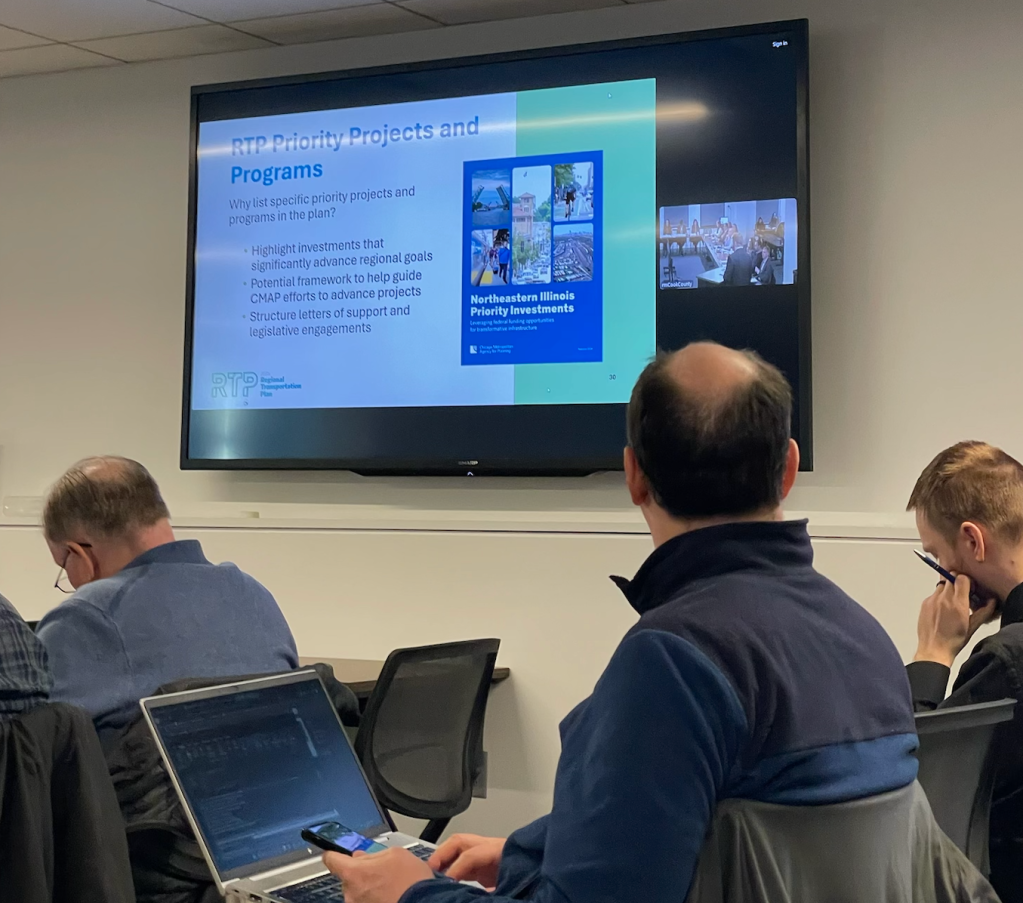
The February 27 meeting of the Chicago Metropolitan Agency for Planning Transportation Committee drew unusually strong public participation around the future of DuSable Lake Shore Drive and the long-running “Redefine the Drive” project and a level of engagement that may signal a turning point in the debate.
More than twenty people delivered public comments in person or via Zoom at the February hearing, and agency staff said that hundreds of written comments had been submitted ahead of the meeting. Because of the number of speakers waiting to testify, the committee voted twice to extend the public comment period to accommodate additional remarks.
The turnout at the Februrary meeting was notable for a mid-morning regional planning meeting that typically draws little public participation. Speakers included residents from lakefront neighborhoods, transit advocates, and community organizers, many of whom urged CMAP not to advance the project into the fiscally constrained portion of the Regional Transportation Plan under its current framework.
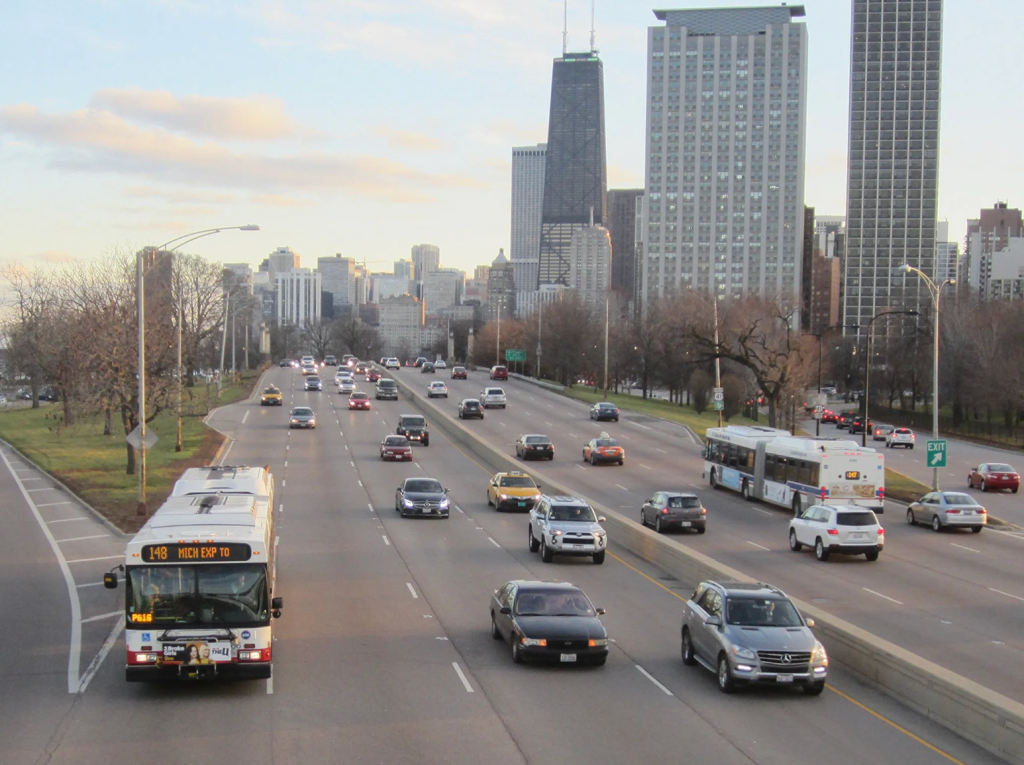
Many commenters argued that the current direction of the project would effectively maintain or rebuild the eight-lane highway along Chicago’s lakefront. That would throw away the once-in-a-lifetime opportunity to make the roadway safer; more environmentally friendly; more walk/bike/transit-oriented; and less of a barrier to lakefront access.
Several speakers emphasized that the planning assumptions underlying the project are more than a decade old and may not reflect changes in travel patterns since the COVID-19 pandemic or the region’s evolving transit governance structure, including the creation of the Northern Illinois Transit Authority. Others pointed to survey data suggesting many Chicagoans want to drive less and would prefer stronger transit options if they were available.
Neighborhood residents also described the day-to-day impacts of the existing roadway. Some said the drive generates noise, pollution, and traffic on nearby streets. Others argued that the highway-like design creates a physical and psychological barrier between neighborhoods and the shoreline parks and beaches.
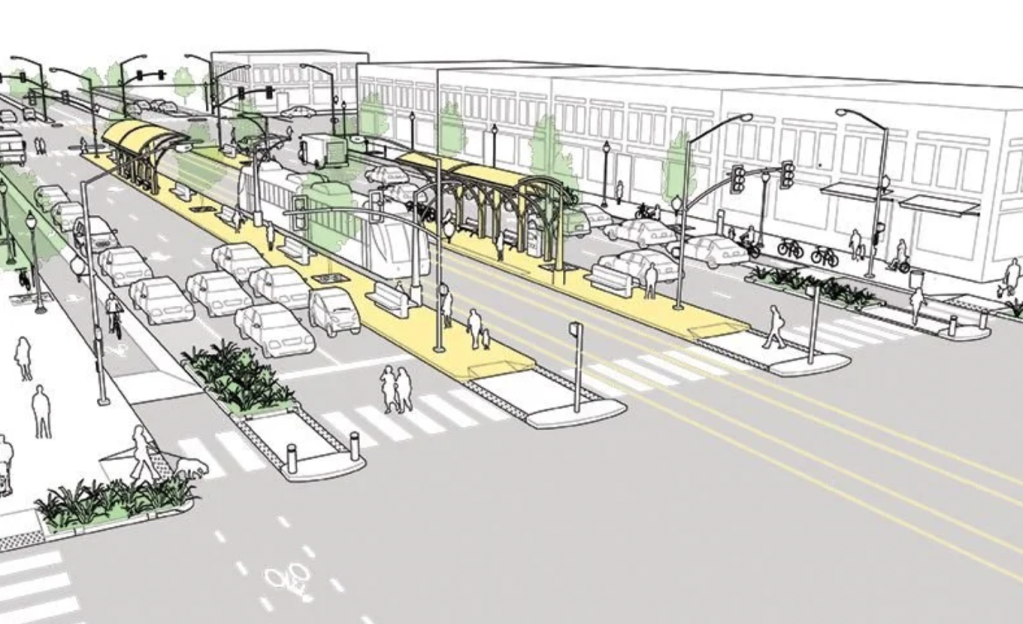
Multiple speakers urged planners to reconsider alternatives that would reduce the highway character of the corridor and instead pursue a boulevard-style design. This would have dedicated transit lanes, safer crossings, and improved pedestrian and bicycle access to the lakefront.
During the meeting, CMAP staff reiterated that including a project in the Regional Transportation Plan’s “constrained” list does not finalize a specific design. However, critics argue that once a project advances within the region’s funding framework, institutional momentum can make major changes significantly more difficult.
The issue is far from settled. CMAP is continuing work on its Regional Transportation Plan, with additional opportunities for public comment expected this summer before the document is finalized. Advocates say sustained public engagement will be critical in determining whether the region locks in a highway-scale design or reconsiders a more transit-focused, people-centered approach to one of Chicago’s most significant public spaces.
The level of public engagement at Friday’s meeting made it clear that the future of DuSable Lake Shore Drive, a corridor that defines miles of lakefront parks and neighborhoods, remains one of Chicago’s most consequential and closely watched planning debates.
Three Ways to Take Action
Email info[at]cmap[dot]illinois.[dot]ov by Thursday, April 23rd, 5 p.m. for all three options:
- Written comment (easiest option)
- Just email your remarks. No live attendance required.
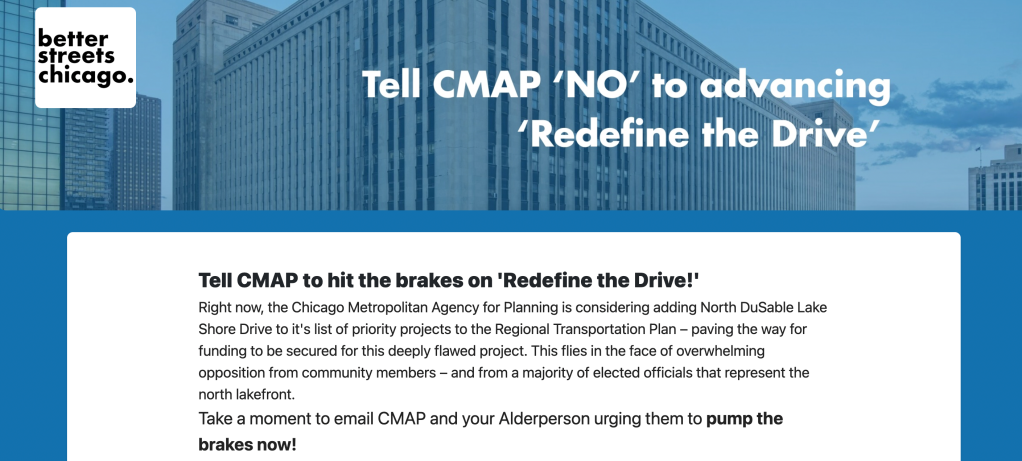
- Or send a message via Better Streets Chicago’s online form.
- On Zoom during the meeting (15-30 minutes will be allocated for this)
- Send an email to receive a link.
- Join by the time public comment begins around 11 a.m.
- In person during the hearing (two hours will be allocated for this)
- Send an email for a building pass.
- The meeting is Friday, April 25 from 9:30 a.m. to 11:30 a.m. at the CMAP offices, 433 W. Van Buren St. in Chicago, Suite 450. Public comment happens around 11 a.m.

On November 12, SBC launched our 2026 fund drive to raise $50K through ad sales and donations. That will complete this year’s budget, at a time when it’s tough to find grant money. Big thanks to all the readers who have chipped in so far to help keep this site rolling to the end of 2026! Currently, we’re at $30,941 with $19,059 to go, ideally by the end of May.
If you value our livable streets reporting and advocacy, please consider making a tax-deductible gift here. If you can afford a contribution of $100 or more, think of that as a subscription. That will help keep the site paywall-free for people on tighter budgets, as well as decision-makers. Thanks for your support!
– John Greenfield, editor
Streetsblog has migrated to a new comment system. New commenters can register directly in the comments section of any article. Returning commenters: your previous comments and display name have been preserved, but you'll need to reclaim your account by clicking "Forgot your password?" on the sign-in form, entering your email, and following the verification link to set a new password — this is required because passwords could not be carried over during the migration. For questions, contact tips@streetsblog.org.