City Council approves $1.8 billion bond package, leaving key traffic-safety funding questions unresolved

By Ellen Steinke
Update 12/22/25, 3:15 PM:
Last Friday, December 19, the Chicago City Council voted to approve a $1.8 billion general-obligation bond package as part of the 2026 budget process. The borrowing authority includes funding for bridge and viaduct repairs, street resurfacing, lead service line replacement, firefighter back pay, and police misconduct settlements.
The bond measure passed with a veto-proof majority. However, the approved package did not restore the level of flexible, locally controlled bond funding for Complete Streets and Vision Zero projects that advocates had sought, nor did it materially change the longterm decline in bond availability shown in the City’s 2025–2029 Capital Improvement Program.
Several alderpeople, including Ald. Daniel La Spata (1st), chair of the City’s Committee on Pedestrian and Traffic Safety, voted against the accompanying management and appropriations ordinances, citing concerns about reduced infrastructure investment, weakened transparency, and new procedural changes that shift greater control over capital spending to a City Council committee structure.
In public statements following the vote, La Spata said the package “decreases investment on street resurfacing over the next two years” and “impacts pedestrian, transit, and cycling-related infrastructure in ways that are more detrimental than I can even get into in this video.”
The Mayor’s Office has said overall transportation investment will increase when federal, state, and other funding sources are included. However, the approved bond package does not reverse the sharp decline in local bond dollars dedicated to traffic safety projects over the life of the capital plan. Advocates note that these local funds have historically been the most flexible and fastest to deploy, allowing the Chicago Department of Transportation to respond quickly to crash trends and safety needs across the city.
Sustainable transportation advocacy groups say they are now shifting their focus to how the approved bond authority is implemented. That includes whether future capital plans restore locally controlled safety funding; how Complete Streets projects are prioritized within larger corridor and streetscape efforts; and whether revenue from automated enforcement is ultimately dedicated to crash-prevention infrastructure as intended under state law.
With the bond package now approved, advocates say the debate is shifting from authorization to implementation. The question is now whether Chicago will maintain the flexible, locally controlled funding that enabled recent safety gains, or rely more heavily on restricted and slower funding sources that make rapid, neighborhood-scale safety improvements harder to deliver.
Update 12/17/25, 12:00 AM:
Mayor’s Office memo emphasizes total funding, but local bond dollars for Complete Streets appear to sharply decline
After Streetsblog Chicago reported that Chicago’s proposed 2025–2029 Capital Improvement Program would significantly reduce funding for Complete Streets and Vision Zero projects, the Mayor’s Office circulated a memo arguing that overall investment in safer streets is increasing when all funding sources are considered. (Read it on Bluesky or Twitter.)
The memo, prepared by the Office of Budget and Management, states that when bond funding, federal and state grants, Tax Increment Financing dollars, and carryover funds are combined, total funding for “safer, more accessible streets” rises from $424 million to $430 million under Mayor Brandon Johnson’s FY26 budget. The memo also highlights planned 2026 investments including bikeways, school-zone safety projects, pedestrian improvements, and bus stop accessibility upgrades.
However, advocates and transportation analysts say the memo does not directly address their central concern: a steep decline in local bond funding, which has historically been the most flexible and reliable source of money for delivering Complete Streets projects quickly and at scale.
According to the City’s own 2025–2029 Capital Improvement Program bond tables, available bond funding for the Transit/Bicycle/Pedestrian Program falls dramatically over the life of the plan from approximately $69 million in earlier years to about $6 million by 2029. That represents a reduction of nearly 90 percent in bond funding for the program, based on figures published by the City’s budget office.
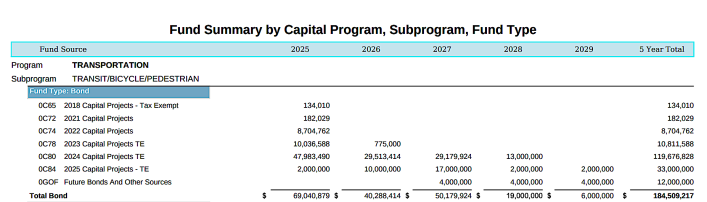
While the Mayor’s Office memo emphasizes total “available funding,” it does not break out how much of that funding is dedicated specifically to traffic-safety or Complete Streets projects, nor does it reconcile the large decline in local bond dollars with its claim of increased investment.
Transportation advocates note that not all funding sources are interchangeable. Federal and state grants are often restricted to specific corridors or project types, require extensive administrative work, and can take years to deploy. By contrast, local bond funding has allowed the Chicago Department of Transportation to rapidly roll out protected bike lanes, pedestrian safety improvements, and other Vision Zero projects across the city.
Active Transportation Alliance Advocacy Director Jim Merrell said CDOT has repeatedly told advocates that flexible local bond funding allowed the department to rapidly deploy safety projects where they were most needed. He said that period also coincided with a sharp increase in delivered pedestrian and bicycle infrastructure and with recent reported declines in traffic fatalities.
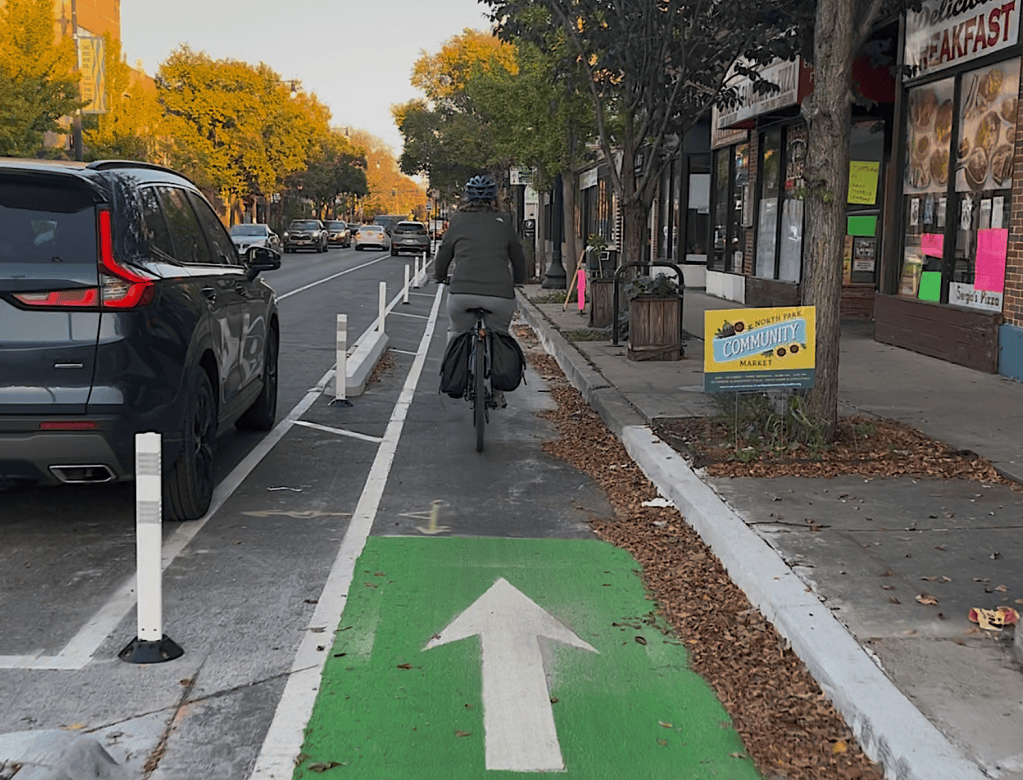
According to CDOT data, more than 50 miles of bikeways were completed in both 2023 and 2024, and 33 miles in 2025. Under the current proposal, the City projects just 23 miles of bikeway projects in 2026, including seven miles of protected bike lanes.
Advocates’ concerns aren’t just the topline number. Local bond money is unique in its flexibility and ability to flow where it’s needed most. When that declines, it becomes much harder to respond quickly to safety needs, even if total funding looks similar on paper.
The Mayor’s Office memo also treats streetscape and corridor-based projects as part of its Complete Streets accounting. Advocates argue that while those projects can include safety elements, they often serve broader purposes, such as beautification or transit capital improvements, and are not a substitute for dedicated crash-prevention funding targeting Chicago’s High Injury Network.
The memo does not dispute the bond funding figures in the City’s own capital tables, nor does it explain how the projected decline in bond availability squares with claims of increased investment.
Advocates say they are continuing to review the memo and are seeking clarification from the administration and CDOT about how Complete Streets funding is defined and tracked within the capital plan. Several alderpeople voted against the bond measure, including Ald. Daniel La Spata (1st), chair of the City’s Committee on Pedestrian and Traffic Safety.
As City Council prepares to consider the bond package, transportation advocates say the key question remains unresolved: whether Chicago is maintaining the flexible, locally controlled funding that has driven recent safety gains, or scaling it back while relying more heavily on restricted and uncertain funding sources.
Update 12/11/25, 3:30 PM: Better Streets Chicago has posted a a webpage you can use to advocate for saving traffic safety project funding. “Mayor Johnson’s 2026 bond proposal defunds safe streets infrastructure by a whopping 70 percent – putting our communities in jeopardy by threatening the progress we’ve made in preventative infrastructure,” the advocacy group posted. “Email him and your alderperson today and tell them to reverse course!”
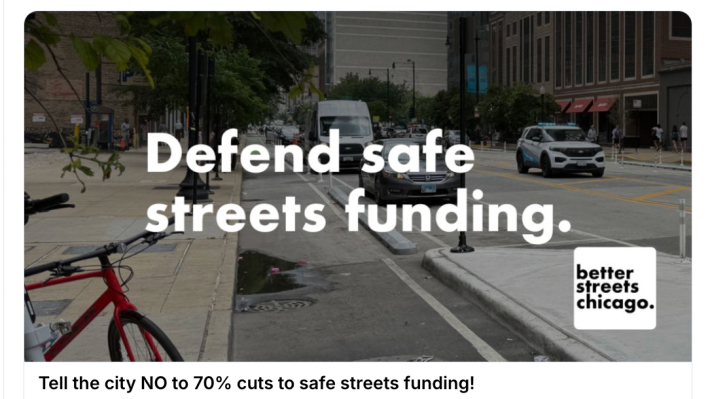
Chicago’s proposed 2025–2029 Capital Improvement Program would reduce the City’s primary funding category for Complete Streets and Vision Zero projects from $791 million to $212 million, a drop of nearly 70 percent.
The amount set aside specifically for safety projects near schools and parks is even smaller: just $8 million across two years, according to the capital plan. Streetscape projects are also newly folded into this line item, meaning the remaining funding for actual crash-prevention work is smaller still.
Other neighborhood infrastructure categories shrink as well. Sidewalk construction falls from $248 million to $161 million; street resurfacing drops significantly; only street lighting holds steady due to recent lawsuits over failing poles.
Bond dollars would be used for back pay and settlements instead of safety infrastructure
The proposed bond package allocates hundreds of millions to obligations unrelated to capital construction. The city seeks approval for $1.8 billion in new general-obligation bonds, much of which would pay for:
- $166 million in firefighter and paramedic back pay under the new Local 2 contract (Chicago Sun-Times)
- Roughly $280 million in police misconduct settlements and judgments, including a $90 million settlement in the Ronald Watts corruption cases (WTTW, Westlaw)
Fiscal experts frequently warn against using long-term bonds for short-term settlements, since it spreads today’s liabilities over decades with interest. The Sun-Times also reported last May that Chicago had already exhausted more than half of its $82 million 2025 settlement budget.
Meanwhile, the capital plan shows neighborhood infrastructure funding tapering off in later years, and the City’s own bond-issuance history suggests those dollars cannot realistically be restored once authorized.
Cutting safety projects increases crashes, injuries, and long-term costs
Chicago saw more than 112,000 reported crashes in 2024, leading to 25,000+ injuries and 130 deaths (Power Rogers, CDOT). Each serious crash requires hours of police, fire, and OEMC response, as well as case follow-up and legal proceedings.
Traffic-calming and Complete Streets projects reduce both the number and severity of crashes. That means fewer emergency responses, less police overtime, and lower long-term liability. Yet Chicago has routinely blown past its police overtime budget by tens of millions (Sun-Times), and 20–30 percent of some years’ settlement totals stem from police crashes and pursuits (Chicago Police Department 2024 Litigation Report).
Chicago also faces mounting liability from basic maintenance failures. CDOT has identified tens of thousands of potentially hazardous sidewalk locations in recent years but repairs only a fraction annually. And each unrepaired site has the potential for an injury and lawsuit.
Cutting safety and maintenance funding imposes fiscal costs that compound over time.
Chicago may be failing to dedicate automated enforcement to safety, despite state law
Illinois law requires that a portion of speed camera and red light camera revenue go toward traffic-safety improvements. Yet Chicago directs most of its automated-enforcement income (more than $100 million from speed cameras in 2023 [Fines & Fees Justice Center]) into the City’s general fund.
Advocates argue that dedicating even half of this revenue to capital projects could roughly double the amount available for Complete Streets under the proposed plan. Bus-mounted camera fines also flow to general Smart Streets programs rather than upgrades on the corridors where violations occur.
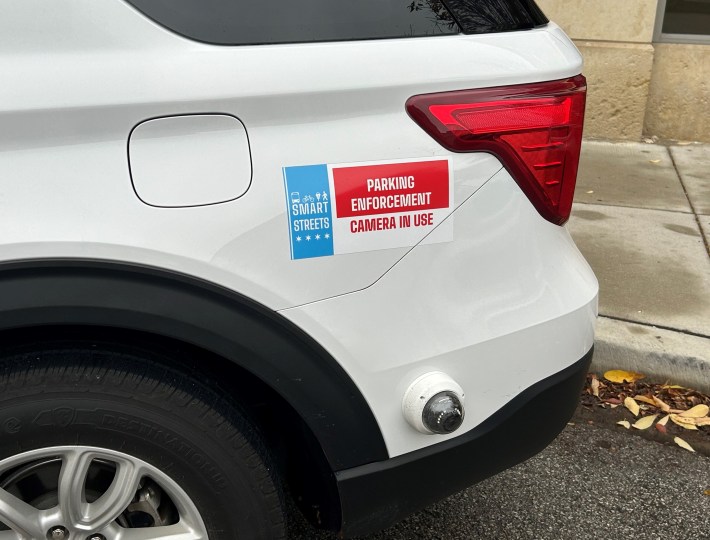
Using safety-camera revenue for actual safety improvements would both comply with the spirit of state law and reduce the need for future enforcement.
What can be done now
Because bond authorizations shape the city’s built environment for years, the decisions made in this budget cycle will define Chicago’s progress on safety well into the next decade. The City Council can:
- Revise the bond package to restore the Complete Streets/Other Neighborhood Improvements category
- Dedicate a consistent portion of speed-camera revenue to safety infrastructure
- Prioritize school- and park-adjacent improvements, currently funded at only $8 million
- Limit the use of long-term bonds for short-term settlement and personnel costs
Chicago faces a choice: balance the budget by cutting the very projects that reduce crashes, injuries, and lawsuits, or treat safe streets as a core component of fiscal responsibility that saves lives and money.

On November 12, SBC launched our 2026 fund drive to raise $50K through ad sales and donations. That will complete next year’s budget, at a time when it’s tough to find grant money. Big thanks to all the readers who have chipped in so far to help keep this site rolling all next year! Currently, we’re at $5,835, with $44,165 to go, ideally by the end of February.
If you value our livable streets reporting and advocacy, please consider making a tax-exempt end-of-year gift here. If you can afford a contribution of $100 or more, think of it as a subscription. That will help keep the site paywall-free for people on tighter budgets, as well as decision-makers. Thanks for your support!
– John Greenfield, editor
Streetsblog has migrated to a new comment system. New commenters can register directly in the comments section of any article. Returning commenters: your previous comments and display name have been preserved, but you'll need to reclaim your account by clicking "Forgot your password?" on the sign-in form, entering your email, and following the verification link to set a new password — this is required because passwords could not be carried over during the migration. For questions, contact tips@streetsblog.org.