Scooters now a permanent part of Chicago’s mobility mix, plus deets on Divvy scooters

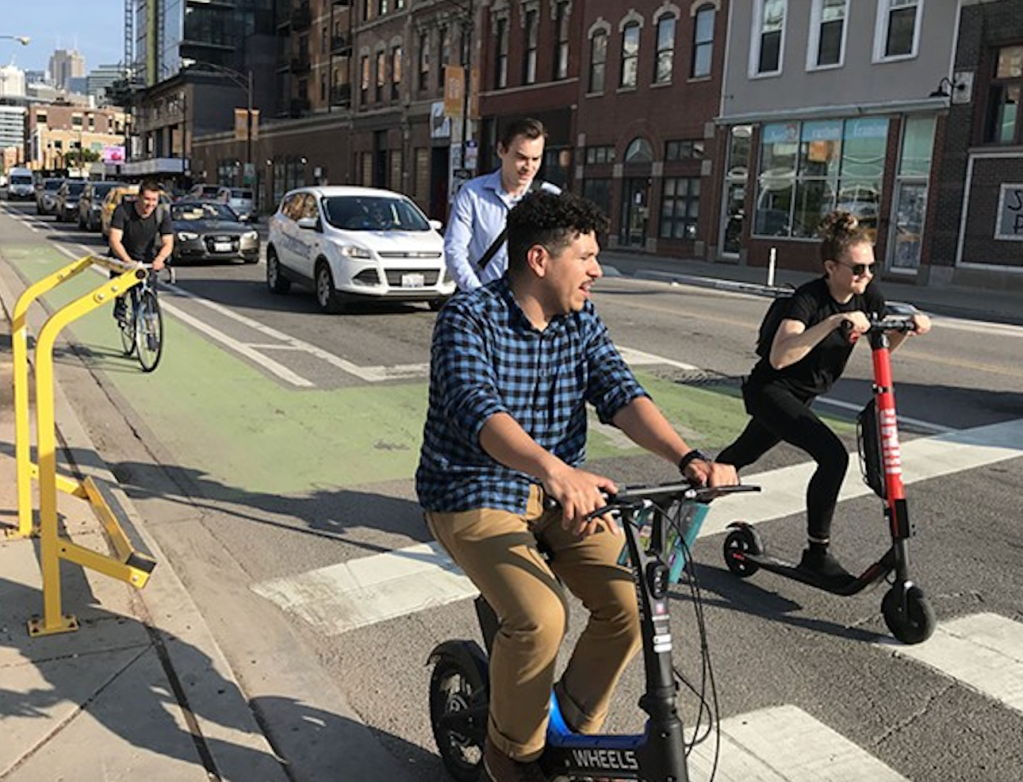
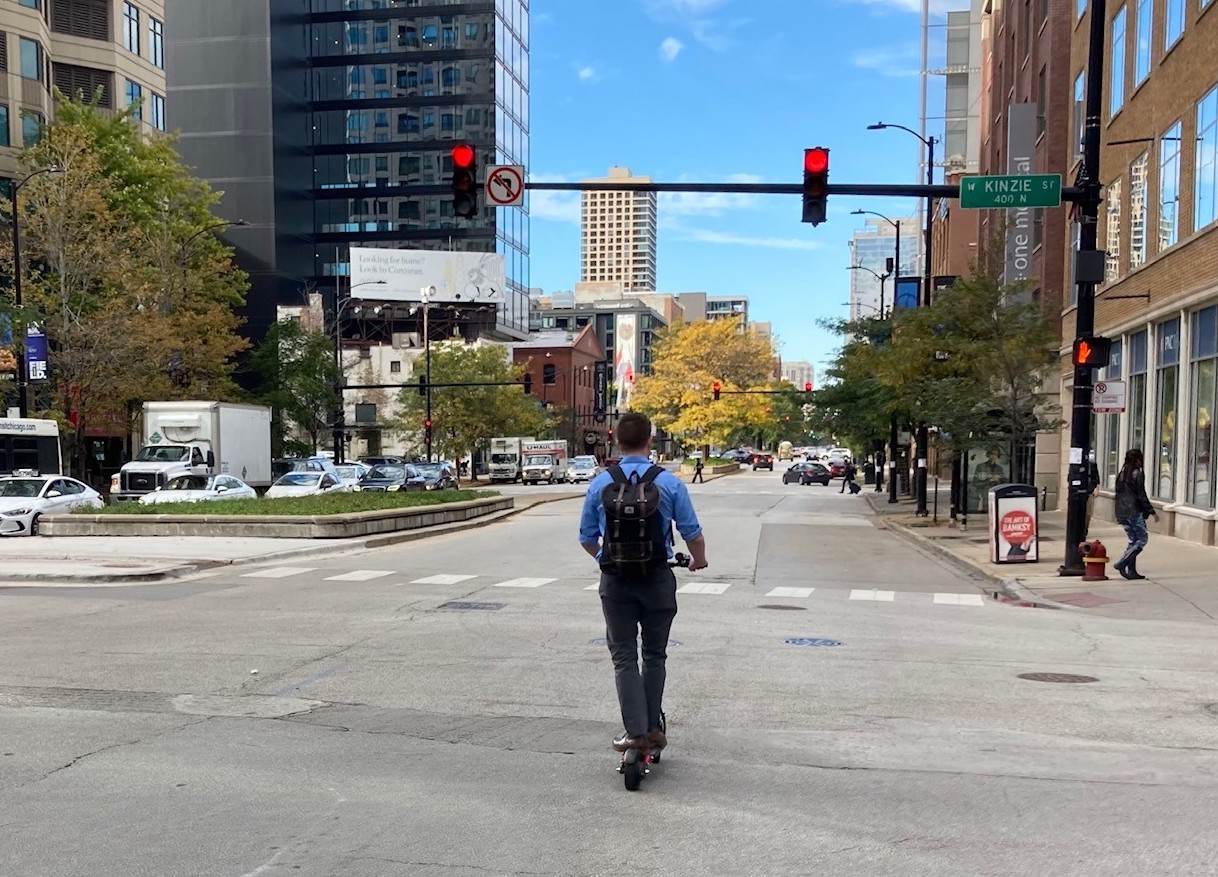
It’s a done deal now. This afternoon Chicago’s City Council approved a permanent, citywide dockless rental electric scooter program, giving residents a new option for fun, space-efficient personal mobility that can help address our city’s congestion, pollution, and traffic violence problems.
A Chicago Department of Transportation representative said during yesterday’s City Council transportation committee meeting that the program would start off with around 6,000 shared e-scooters and that after “demonstrated demand,” an increase to up to 12,500 scooters could happen. Scooters would be allowed downtown but not on the Lakefront Trail. As during the 2020 pilot program, “lock-to” scooters, with built-in cable locks for securing them to bike racks and sign poles, would be required, a strategy which reduced sidewalk clutter and scooter vandalism last year. A new requirement for vendors would be to deploy sidewalk detection software to discourage sidewalk riding.
“I’m glad that it passed,” said ordinance sponsor Ald. Howard Brookins (21st), chair of the Council’s transportation committee, and a recreational cyclist who was once seriously injured on his bike when a squirrel jumped in his spokes, in the wake of today’s vote. “It will be good for the environment, it will be good for the city, both in congestion, pollution, and just the overall enjoyment of people who come to visit or want to take short jaunts from Point A to Point B that aren’t that far away. “
Brookins said the next step in launching the scooter program will be the Chicago Department of Business Affairs and Consumer Protection issuing a request for proposals from companies, and determining “who are the most responsible bidders and will choose them to be licensees.”
Chicago’s 2020 scooter pilot included Bird, Lime, and Spin, and the three firms held a press conference on Monday along with Brookins and fellow bicycling aldermen Daniel LaSpata (1st) and Water Burnett (27th) to push for passing the legislation.
Not all City Council members are fans of the technology. Ald. David Moore (17th) was the sole no vote at yesterday’s committee meeting. “A major question that many of us [aldermen] are dealing with is these scooters being strewn all over the community,” he told me before today’s hearing. “They’re going going to be in front of people’s houses, on poles, hanging out in streets. We’re going to get those calls. We don’t have enough staff to deal with those issues. It’s wasting our time and it’s frustrating our residents.”
“I’m not against the product, but there should be docking stations for them, like the Divvy bikes,” Moore added. (The newer electrical-assist Divvy cycles can also be locked to racks or poles with built-in cable locks.) He said he was worried about taxpayers being on the hook for future scooter docking stations.
Ald. Ariel Reboyras (35th), another cycling enthusiast, acknowledged concerns about sidewalk riding and clutter before the meeting. But he noted that CDOT projects the city will collect $4.4 million in licensing fees, and a 9 percent leasing tax will bring in 9 cents in revenue for every dollar in rental fees charged to customers. “We should take that money. We need it.”
Reboyras added that in order to keep scooters riders safe and encourage them to use the street instead of sidewalks “We should have protected bike lanes citywide and let the scooters use them.”
Before the measure passed in a roll call vote, LaSpata again voiced support, noting the potential of scooters to reduce emissions and prevent serious crashes by replacing car trips. Ald. Ray Lopez (15th) said he was opposed, echoing Moore’s arguments by saying that he’s not interested in “being the scooter police, when I have more than enough to do as alderman.”
Ultimately the measure passed in a landslide, with the only other opponents being aldermen Brian Hopkins (2nd), Anthony Beale (9th), Roberto Maldonado (26th).
CDOT had previously voiced support for the legislation as a means to increase transportation access in underserved communities. “The city firmly believes that where you live should not determine how much access you have to opportunities,” said spokesperson Mike Claffey via email. “We have worked with members of the City Council to craft a proposal for a shared e-scooter licensing program that can provide equitable mobility benefits throughout the city in a responsible and manageable way, with a focus on serving areas with fewer transportation options.” The city’s most recent scooter pilot required fifty percent of a vendor’s scooters to be in the designated equity zone on the South and West sides.
So will the city-owned Divvy system be getting in on the scooter action? Last year Lyft, the bike-share concessionaire didn’t participate in the scooter pilot because, according to a spokesperson, the company was focussing on Divvy expansion. However, the new ordinance authorizes CDOT to amend its existing Divvy contract to expand to docked scooter-sharing within the bike-share station area, which is slated to include the entire city by next year.
A CDOT survey conducted after the 2020 pilot found saw 67 percent of non-riders felt scooters should be required to be parked in docks. But, again, that’s not the case with the new e-Divvies.
According to a source, if Divvy expands to scooters, they would likely be available for use by current bike-share members.

Read More:
Streetsblog has migrated to a new comment system. New commenters can register directly in the comments section of any article. Returning commenters: your previous comments and display name have been preserved, but you'll need to reclaim your account by clicking "Forgot your password?" on the sign-in form, entering your email, and following the verification link to set a new password — this is required because passwords could not be carried over during the migration. For questions, contact tips@streetsblog.org.