Why Social Democracies Are Great Places to Ride a Bike

I wrote this post as response to a comment from a right-wing troll on my writeup of last week’s Mayor’s Bicycle Advisory Council meeting on the Chicago Reader website, but I thought it might be of interest to Streetsblog readers as well.
Ignoring the offensive aspects of your comment [among other things, the commenter invited cyclists to “fight for your right to die in the road like squirrels,”] there’s one kernel of truth. You wrote, “Safe cycling and socialism seem to exist in the same plane.” Indeed, many of the safest countries for cycling, with the highest bike mode shares, are social democracies like the Netherlands, Denmark, Sweden, France, and Germany.
In these places people have a sensible view of the role of government in maintaining a decent standard of living for all residents. They’re willing to pay relatively high taxes in order to maintain first-class infrastructure and make sure everyone gets decent housing, healthcare, and education, which is why these nations score high on happiness indices.
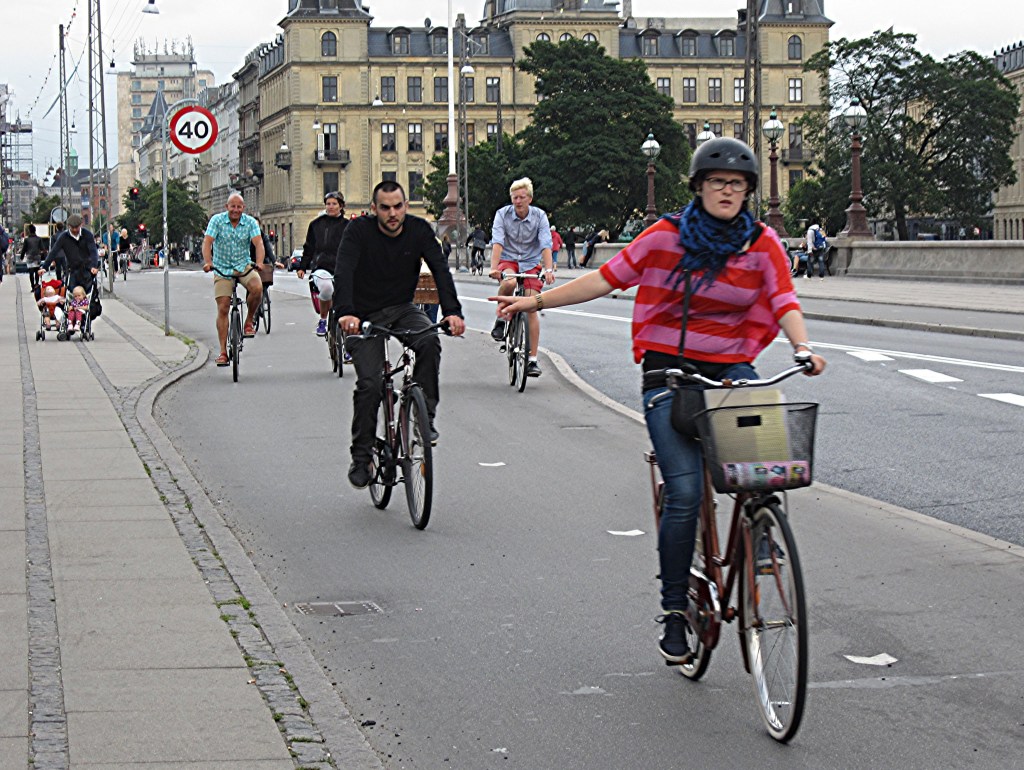
These countries take a similarly pragmatic and humanistic view of transportation. They’re investing in high-quality transit, walking, and biking facilities. Bikeways are often built so that cyclists never have to share the road with high-speed traffic. In general, street designs and traffic policies are created with public safety and mobility for all in mind, rather than prioritizing moving motor vehicles through cities as quickly as possible, as we tend to do in the U.S.
For example, in the Netherlands, if a driver strikes a pedestrian or bicyclist, the motorist is always held liable, unless it can be proven that the vulnerable road user caused the crash. As a result, everyone drives much more carefully than in places like the U.S., where if a driver kills a person on foot or on bike, and it isn’t a DUI or a hit-and-run, there’s usually little or no penalty.
Thanks to these progressive practices, these social democracies have high rates of biking, walking, and transit use (more than a third of all trips in Amsterdam and Copenhagen are made by bike) and low traffic crash, injury, and fatality rates (although bike helmet use is rare compared to the U.S.) People are able to get around efficiently, and traffic-related pollution is less of a problem. Everyone wins.
Streetsblog Chicago will be off on Wednesday, September 19, and resume publication on Thursday.

Did you appreciate this post? Consider making a donation through our PublicGood site.

Read More:
Streetsblog has migrated to a new comment system. New commenters can register directly in the comments section of any article. Returning commenters: your previous comments and display name have been preserved, but you'll need to reclaim your account by clicking "Forgot your password?" on the sign-in form, entering your email, and following the verification link to set a new password — this is required because passwords could not be carried over during the migration. For questions, contact tips@streetsblog.org.