CDOT’s New Complete Streets Guidelines Put People First, Not Cars

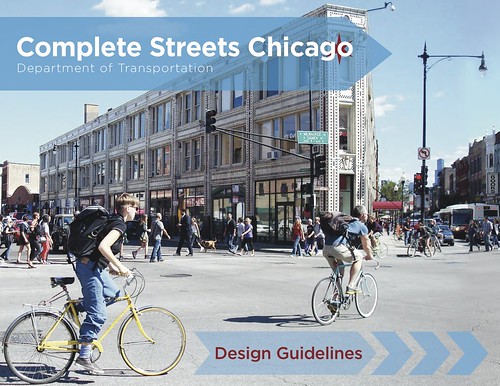
The Chicago Department of Transportation’s new Complete Streets Chicago design guidelines haven’t even been officially released yet, but we’re already fans. The agency leaked a near-final draft of the document via an article published this morning in the Atlantic Cities; CDOT plans to release the final document by next week.
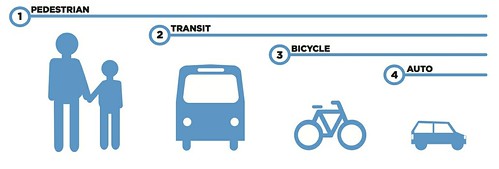
We haven’t had a chance to digest the entire 138-page document yet, but we really like what we’ve read so far. In a nutshell, the guide takes Chicago’s 2006 complete streets policy, which mandates that the needs of all road users must be accommodated in transportation projects, and codifies it to make it a dominant part of the CDOT culture. Best of all, it actually prioritizes sustainable transportation over car travel, as shown by this statement from the executive summary:
To create complete streets, CDOT has adopted a pedestrian-first modal hierarchy. All transportation projects and programs, from scoping to maintenance, will favor pedestrians first, then transit riders, cyclists, and automobiles.
This paradigm will balance Chicago’s streets and make them more ‘complete.’ In addition, street design will be conducted in a manner that supports context and modal priorities and is not limited by rigid engineering standards. This will allow staff to develop innovative solutions that meet the over-arching goal of a complete street.
We’ll provide details about the guidelines in a post tomorrow. In the meantime, ponder the concluding paragraphs of the executive summary, which refer to a 1913 case where a speeding motorist who knocked over a pedestrian on Michigan Avenue was fined $200 by a judge whose wisdom was ahead of his time.
With this guide, the City begins implementing Chicago Forward Action Agenda and the Chicago Pedestrian Plan goals. These policies will benefit the physical and mental health and economic vitality of the entire city.
At the dawn of the automobile age a local judge stated that “the streets of Chicago belong to the city, not to the automobilists”. Nearly a century later, Complete Streets seeks to make it true.

Read More:
Streetsblog has migrated to a new comment system. New commenters can register directly in the comments section of any article. Returning commenters: your previous comments and display name have been preserved, but you'll need to reclaim your account by clicking "Forgot your password?" on the sign-in form, entering your email, and following the verification link to set a new password — this is required because passwords could not be carried over during the migration. For questions, contact tips@streetsblog.org.