Illinois transportation leaders have called for expanded tolling. A new federal grant program offers a chance to act.

Just over a month after the Chicago Metropolitan Agency for Planning adopted a long-range transportation plan calling for expanded tolling and the exploration of congestion pricing, the federal government has presented an opportunity to advance those recommendations.
On November 18, the Federal Highway Administration announced $100 million in competitive grants through its Congestion Relief Program. Applications are due December 17.
Established under the bipartisan 2021 Infrastructure Investment and Jobs Act, the program is designed to reduce highway congestion and its associated economic and environmental costs while making more efficient use of existing transportation infrastructure.
Eligible projects include congestion pricing, tolled managed lanes, parking pricing, express bus service, and programs that encourage travelers to shift to other modes or travel outside peak periods. State governments, metropolitan planning organizations, and municipalities pursuing projects in urbanized areas with populations exceeding 1 million are eligible to apply, including the Illinois Department of Transportation, the Chicago Metropolitan Agency for Planning, and the City of Chicago.
Ironically, the opportunity comes from the same U.S. Department of Transportation that has been attempting to dismantle New York City’s congestion pricing program, as Streetsblog NYC reported last week.
But for Chicago, one of the most significant aspects of the program may not be the funding itself. Federal law generally restricts tolling existing interstate highway lanes that are currently untolled. The Congestion Relief Program provides a potential exception, allowing the U.S. transportation secretary to authorize interstate tolling in up to ten urbanized areas under the program, subject to statutory requirements.
That presents an opportunity for Illinois to pursue a transportation strategy its own planning documents have increasingly embraced.
Illinois already has a policy framework for tolling
CMAP’s 2026 Regional Transportation Plan, unanimously adopted by its board and Metropolitan Planning Organization Policy Committee on October 14, explicitly recommends exploring congestion pricing as a strategy to improve transportation reliability. The plan also recommends expanding tolling across northeastern Illinois to help pay for reconstruction and maintenance of aging infrastructure. More than 70 percent of IDOT-owned expressways in the region are over 50 years old, according to the plan.
The document acknowledges that the region’s transportation funding challenges are not simply a matter of insufficient revenue, but also of the long-term financial obligations created by decades of infrastructure expansion. “For decades, northeastern Illinois has added new roads, extensions, and facilities to the ledger, and the obligations they carry have grown faster than revenue can keep pace with,” the plan states.
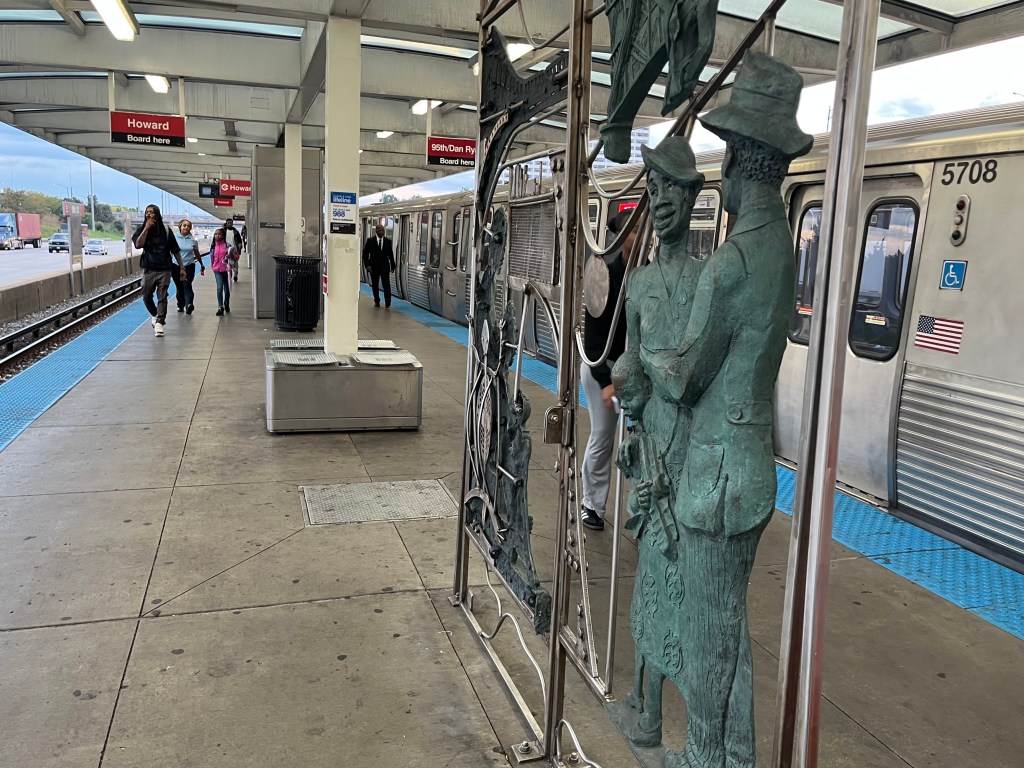
Similar recommendations appear in the Illinois Blue-Ribbon Commission on Transportation Infrastructure Funding and Policy’s final report, released in February. The commission recommends expanding tolling on heavily traveled corridors, identifying the reconstruction of the Eisenhower Expressway (I-290) and the potential addition of managed lanes on the Stevenson Expressway (I-55) as near-term opportunities. It also identifies the Dan Ryan Expressway (I-90/94) as a potential candidate for future tolling. The report specifically names the federal Congestion Relief Program as one mechanism through which Illinois could pursue authorization to toll existing interstate capacity.
Following the report’s release, IDOT launched its Blueprint initiative to translate the commission’s recommendations into action.
What could congestion pricing look like in Chicago?
Thomas Bamonte, a senior advisor at the Metropolitan Planning Council with decades of experience in transportation law, planning and policy, suggested on Bluesky that IDOT and CMAP could pursue federal authorization to introduce dynamically priced tolls on existing express lanes on the Kennedy and Dan Ryan.
Unlike New York City’s congestion pricing program, which charges motorists entering a designated area of Manhattan, this approach could allow drivers to choose between untolled general-purpose lanes and tolled express lanes.
Tolls could fluctuate according to traffic conditions, managing demand for the express lanes to maintain more predictable travel times. Such lanes could also provide opportunities for faster, more reliable express bus service, allowing more people to travel through congested corridors without adding to the number of private vehicles on the road.
Illinois already has an agency experienced in electronic toll collection and roadway operations: the Illinois State Toll Highway Authority. However, implementing tolls on IDOT-controlled expressways would require additional coordination and legislative or regulatory action.
A federal grant award alone would not authorize Illinois to begin collecting tolls. The program requires applicants proposing interstate tolling to explicitly request federal authorization, and applicable state and local legal requirements would also need to be met.
Chicago’s congestion problem isn’t going away
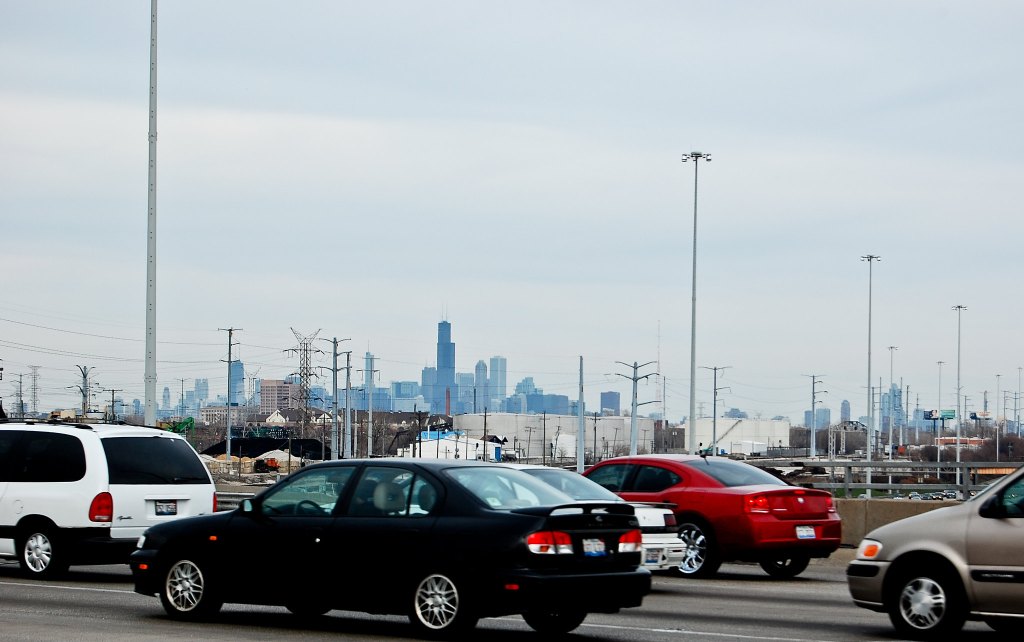
A recent Chicago Sun-Times and WBEZ investigation found that some of the worst inbound afternoon travel times on the Kennedy in more than two decades occurred this year, even after the completion of its three-year rehabilitation project in October 2025. Meanwhile, ongoing construction elsewhere along the expressway continues to disrupt travel.
NYC offers an example of what can happen when transportation agencies address congestion by managing demand. In January, New York State officials reported that 27 million fewer drivers entered Manhattan’s congestion pricing zone during the program’s first year, an 11 percent reduction. Officials estimated that the program generated more than $550 million in net revenue, helping unlock $15 billion in public transportation investments.
While a system of tolled express lanes would differ considerably from New York’s program, its experience illustrates how roadway pricing can serve both transportation management and funding objectives.
Who would benefit from roadway pricing?
One of the recurring concerns about congestion pricing is its potential financial burden on lower-income motorists, particularly those who lack practical public transportation alternatives. But the existing system also imposes costs on households, including those that do not own cars. Congestion contributes to slower bus service, air pollution, lost productivity, and less predictable travel times.
An August 2026 white paper by UCLA transportation scholar Michael Manville distinguishes between the fairness of roadway pricing whether users pay for the costs they impose on others and its affordability. The paper argues that affordability concerns can be addressed through targeted assistance and redistribution of toll revenue without abandoning the broader benefits of pricing.
Potential strategies include income-based toll discounts and reinvesting revenue in affordable, reliable public transportation. Illinois already operates the I-PASS Assist program, which helps lower-income households access the benefits of electronic toll collection. The state commission’s report also points to Virginia’s I-66 express lanes as an example of how toll revenue can support complementary public transportation services within the same corridor.
With northeastern Illinois entering a new era of regional transit coordination under the Northern Illinois Transit Authority, roadway pricing could present an opportunity to further integrate highway and transit planning rather than treating them as separate endeavors.
CMAP and IDOT discuss the grant opportunity
Whether IDOT, CMAP, or the City of Chicago will pursue the federal funding opportunity remains an open question. Streetsblog Chicago reached out to CMAP and IDOT to ask whether the agencies are considering applying and coordinating on a potential proposal.
CMAP spokesperson Jennie Vana said her agency is not considering applying for funding through the federal Congestion Relief Program before the December 17 deadline. “As the regional planning agency, we would support our partners and not directly apply,” she said via email. “We will work with our partner agencies to explore this grant program because it aligns with regional goals in CMAP’s Regional Transportation Plan. It would be in the best interest of the region to explore and apply for these funds.”
Could the program provide an opportunity to pursue federal tolling authorization for existing interstate lanes, including dynamically priced managed lanes? “Yes, a project can propose tolling on the existing interstate system through this grant program,” Vana replied. “See p. 5-6 of the full Notice of Funding Opportunity for the Congestion Relief Program.”
Asked what additional legislative or regulatory steps would be necessary to advance such an initiative in Illinois,” Vana responded that there are several potential pathways to advance tolling, and they require a combination of federal and state approvals. “The Congestion Relief Program is the most recent federal program to provide an opportunity to toll on the existing interstate system. An older program includes the Value Pilot Pricing Program. At the state level, approval requires a joint resolution from the Illinois General Assembly and sometimes approval from the governor. The specific pathway is complex and shaped by the details of the proposed project.”
Here’s state transportation department spokesperson Guy Tridgell’s response to our queries. “Previously, IDOT worked with its regional partners and successfully demonstrated that transit provides congestion mitigation, securing funds through this program for improvements to the CTA Blue Line’s Forest Park branch,” he stated via email. “We are still discussing internally to determine eligible projects for this next application period.”
With state and regional transportation planners already recommending expanded tolling and federal funding now available to explore and implement congestion pricing, the December 17 application deadline offers an early indication of whether Illinois intends to seize the opportunity.
Paging Alanis Morrisette! Check out Streetsblog NYC’s look at the irony of USDOT Secretary (and former reality TV star) Sean Duffy promoting this initiative: “Sean Duffy’s DOT Pitches Congestion Pricing Grants While Trying to Kill Congestion Pricing.” – John Greenfield, editor

If you appreciate Streetsblog Chicago’s reporting and advocacy on local sustainable transportation issues, please consider making a tax-deductible donation here. Thank you!