Lime squeezes out a victory as Divvy/Lyft contract extension committee vote is deferred. But alders approved expansion of Smart Streets camera enforcement.

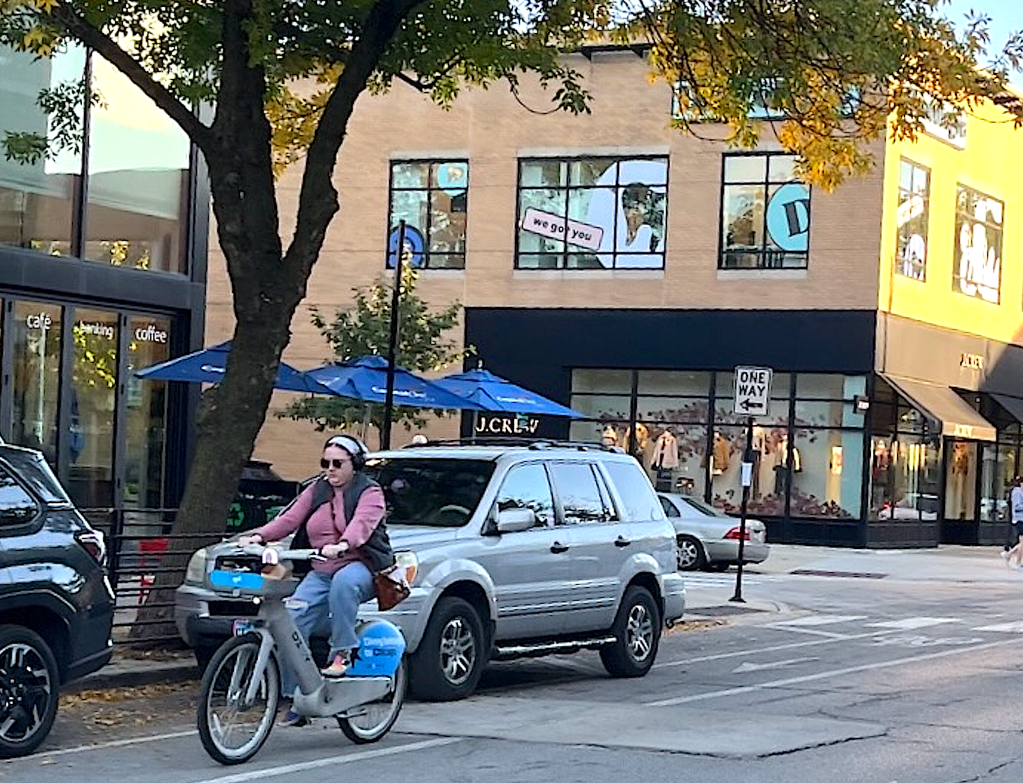
As Streetsblog Chicago reported yesterday, there’s been some juicy discussion about Lime e-scooters recently. The company, Divvy’s only remaining competitor, has indicated it might leave Chicago if the City Council approves a proposed five-year contract extension with Lyft, the Divvy concessionaire. The green scooter folks emerged victorious from today’s Pedestrian and Traffic Safety Committee hearing with the preliminary vote deferred, providing more time to debate the plan.
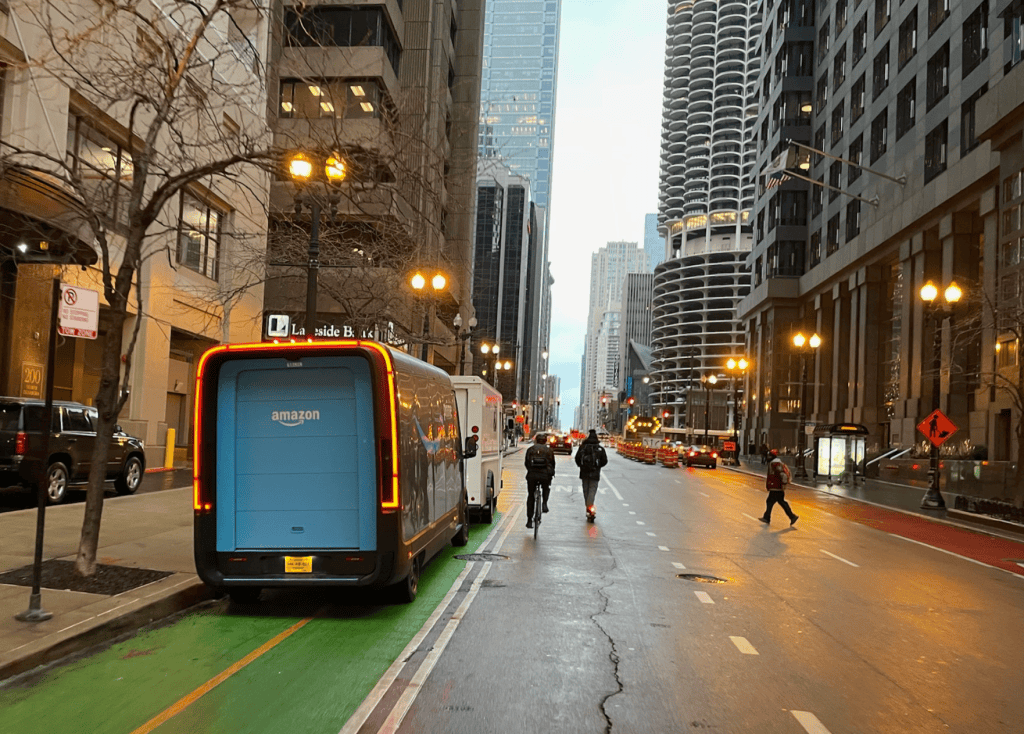
On the other hand, today the committee unanimously voted to approve the expansion of the Smart Streets Pilot Program’s camera enforcement of downtown bus/bike lanes and bus stops. If the ordinance is approved by the full Council, the initiative will grow out in stages to eventually cover the entire city and become a permanent policy.
The contract controversy
The Divvy system, which includes bicycles and e-scooters, is owned by the City of Chicago, overseen by the Chicago Department of Transportation, and managed by Lyft. Divvy uses stations for parking the vehicles, but currently riders can end electric bikes and scooter trips by securing the vehicles to bike racks and poles using built-in cable locks. Lime scooters can only parked using cables.
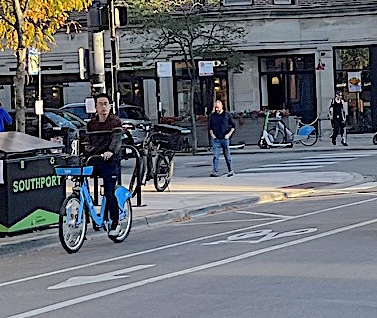
In response to complaints about sidewalk clutter from residents and their City Council reps, CDOT and Divvy have proposed eliminating the option of parking their vehicles far from stations. They say they are adding more stations to make it more likely you can park in a dock without a long walk to your destination. Non-electric Divvy bikes would also now get locking cables, and all Divvy vehicles would be permitted to lock to racks or poles near stations where no empty docks are available.
However, Lime doesn’t have stations for its scooters. As it stands, the company is prohibited from having more than 4 percent of its vehicles in Divvy’s designated “Core Area” in the pedestrian-dense central city at any time. The proposed contract extension would gradually expand the Core Area, including most lakefront districts.
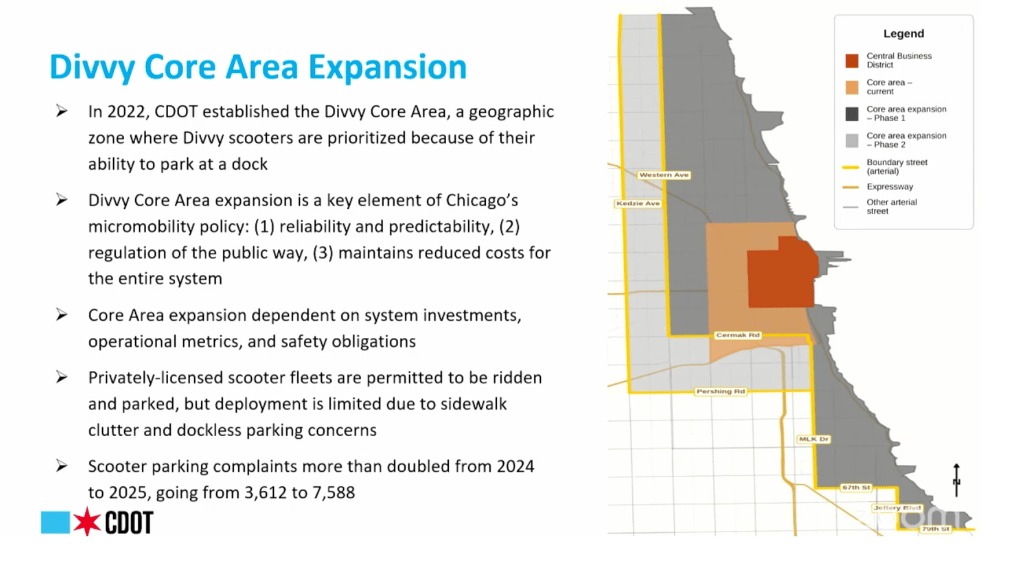
Of course, this would also give Divvy dominance over many more square miles, which could make the publicly owned, albeit privately managed, system, much more profitable, while minimizing the territory where Lime can freely operate. Needless to say, the company with green machines isn’t happy about the plan, and has suggested that it could quit operating in Chicago if the contract extension passes as currently planned. They argue that would decrease micromobility access in lower-income communities on the South and West sides, which would be inequitable.
As such, it was obvious that there were two different teams present in the Council Chambers. Some supporters of the contract extension wore black Divvy t-shirts, while several opponents wore Lime green.
During the public comment period Divvy Field Manager Alberto Otarola voiced support for the proposed deal, and praised his unionized job with and Shift Transit, the Lyft subcontractor that handles bike-share Divvy operations. “I hope evrerything goes in favor of Shift, because I’ve been working for [Divvy] since 2013,” he said. “I have nothing to say but good words for the working conditions they have there.”
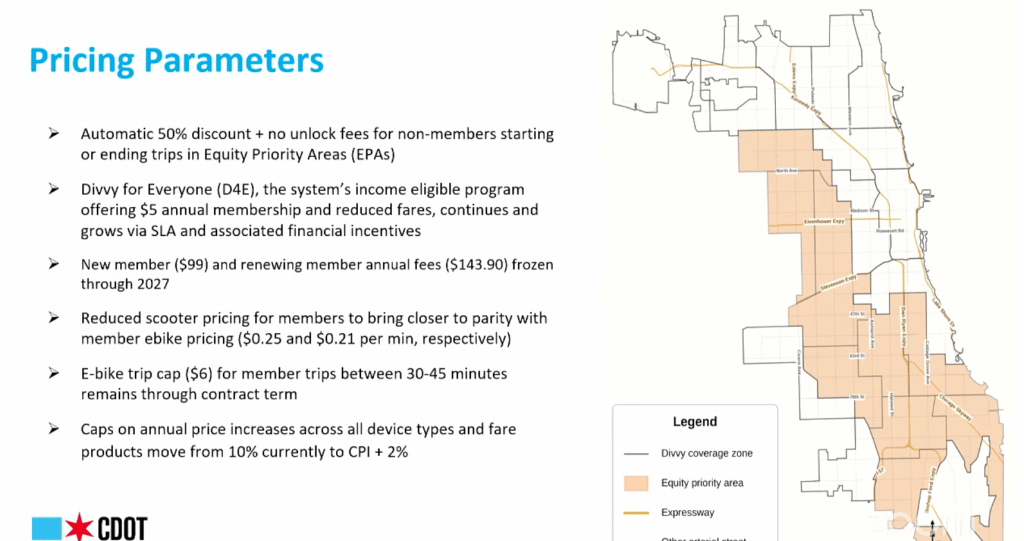
Matt Weiss from Equiticity also endorsed the plan. “For the families that we work with, getting around the city affordably isn’t a convenience,” he said. “It’s how people get to work, to school and the doctor, and connect with each other. This extension protects that with Divvy. It guarantees a 50 percent discount across the Equity Priority Areas, covering about a 104-squares of both the South and the West sides.” This would be for trips starting and ending in these zones.
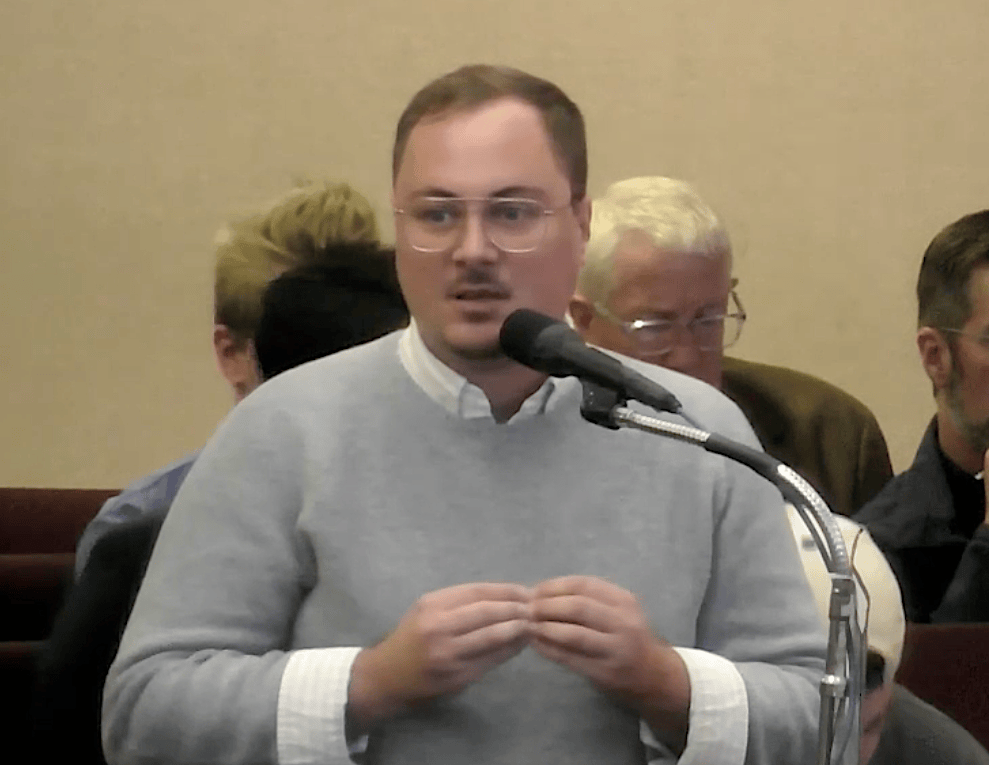
Other sustainable transportation advocates who expressed support for the contract extension included Jim Merrell from the Active Transportation Alliance and Nik Hunder from Chicago, Bike Grid Now! Hunder did suggest making a few changes to the Divvy program to make it more like Montreal’s Bixi, such as offering rental bike trailers.
Vanessa Serrano, Lime’s Midwest general manager, discussed concerns about the extension. “This new contract would drastically expand Lime’s no-operating zone for no benificial reason, and it should not pass this committee without extended public debate,” she argued. “If Lyft gets to arbitrarily limit competition from Rogers Park to South Shore, it would give a single operator near-complete control over the micromobility network.”
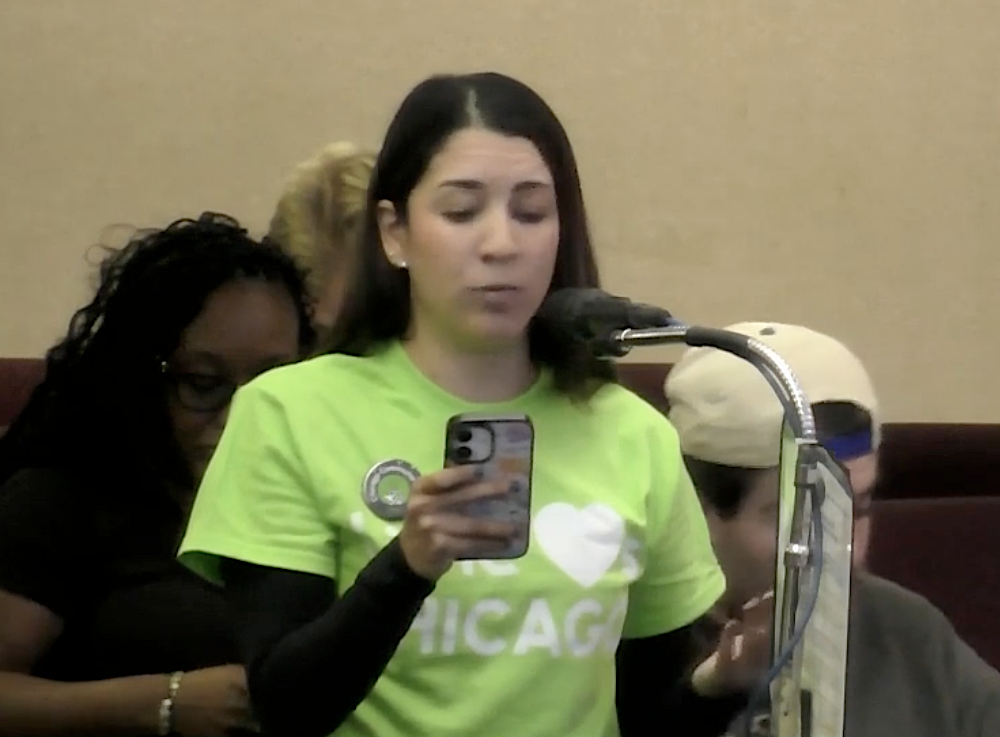
Lime spokesperson Lee Foley echoed her sentiment. “What is the rush to approve a contract that could potentially take away the preferred transportation choice of thousands of Chicagoans, while having the added impact of substantially reducing the much-needed revenue the City has depended on from both Lyft and Lime?” he said. “Lyft does not need a monopoly for Divvy to be successful… I respectfully urge the Committee to defer this vote until the New Year when all stakeholders, including CDOT, Lyft, Lime, and the community partners are able to sit in one room to shape the future of Chicago’s shared micromobility program.”
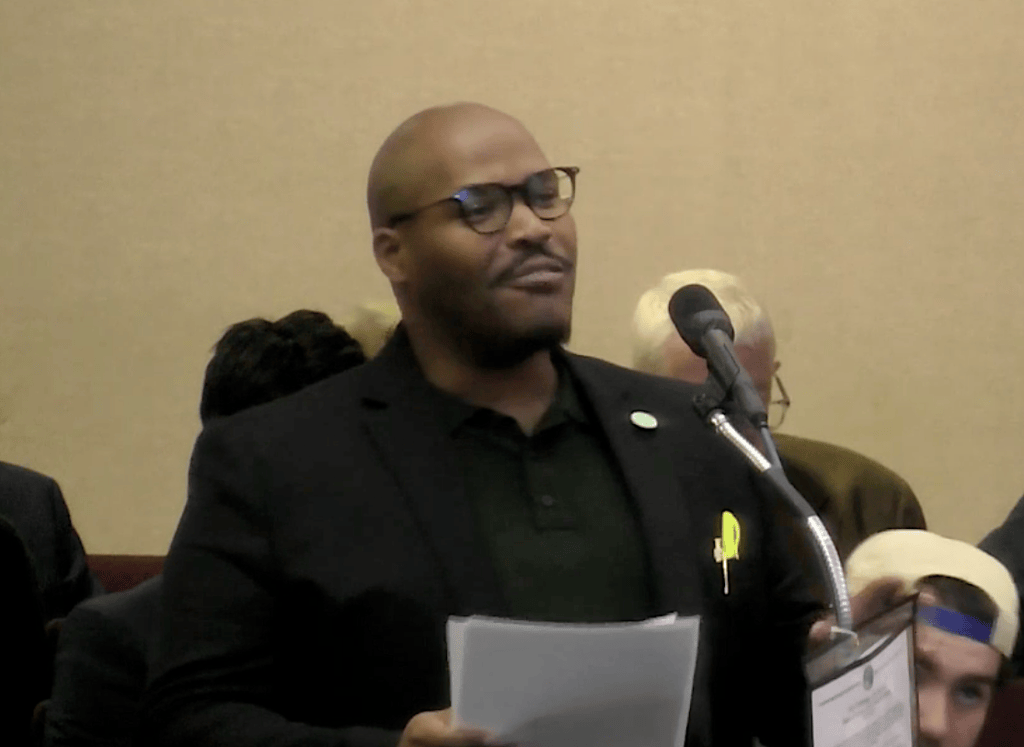
Better Streets Chicago’s Kyle Lucas disagreed with Foley’s take. “I want to emphasize something that’s really special about Divvy,” he said. “It’s ours. We own Divvy. It is a public good. And it should be thought of as an extension of our public transit system, CTA Metra, and Pace. Divvy provides a public option for the “last mile” trips conecting from those modes to the rest of your destination in the city of Chicago. And for many people, their whole trip… I don’t agree that this has been a rushed process. The City has, in good faith, engaged with advocates for feedback for months now.”
Later in the meeting Ald. Timmy Knudsen (43rd), indicated that he supports the contract plan in part in part because it would reduce complaints about badly parked devices in his toney district, largely Lincoln Park. But he asked the CDOT officials present if there are any downsides on waiting on renewal of the Divvy contract.
“Our goal… is to deliver these benefits to the public as quickly as possible,” CDOT Deputy Commissioner Vig Krishnamurthy. “We’ve worked very hard to create a package that we think will be very beneficial to users of the system as well as the general public.”
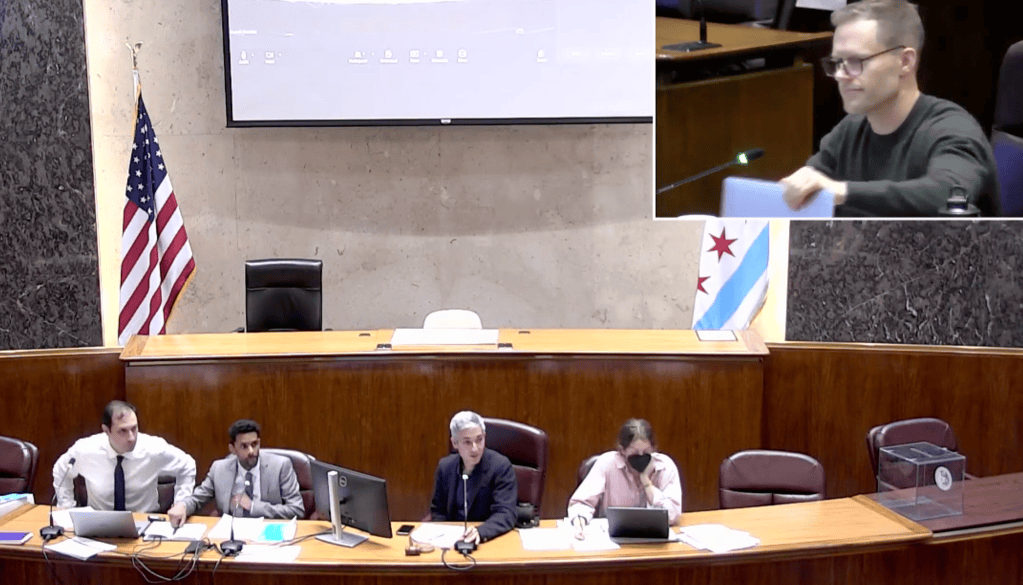
Ultimately, Knudsen’s Lakeview neighbor Ald. Bennett Haller (44th) requested more time to get more information and think things over. “I would move to defer [the vote] so that we can come back and deal with and really flesh out some of these questions.” Board Chair Ald. Daniel La Spata (1st) called for a vote, and committee members voted eight to four to defer the motion.
The Smart Streets expansion passes
The Smart Streets Pilot Program, launched in November 2024, uses cameras mounted on buses and other City vehicles to issue tickets for vehicles standing or parked in downtown bus and bike facilities. (New state legislation would be needed to allow cam enforcement of driving violations in these spaces.)
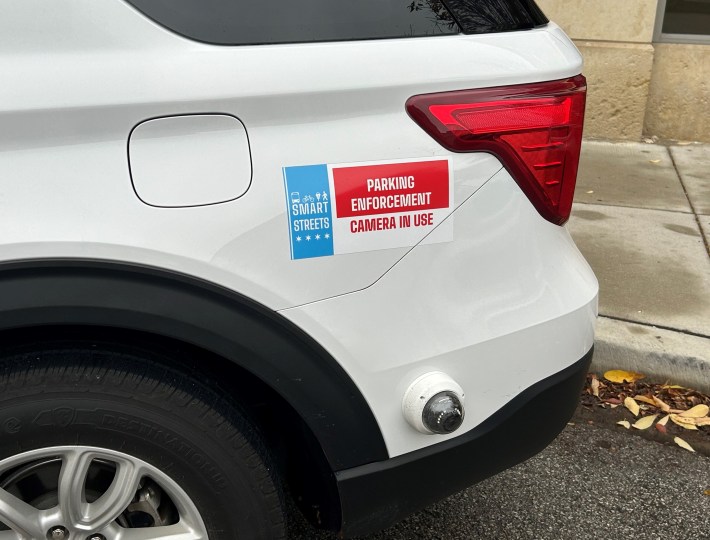
Ordinance sponsor Ald. Andres Vasquez (40th), who is not a Traffic Safety Committee member, said he was moved to take action due to tragedies caused by illegal parkers, such as the death of Lily Shambrook, 3, in June 2022 in Uptown. La Spata later mentioned the death CDOT Complete Streets Planner Riley O’Neil, 35. last June in Bridgeport.
“That led to a number of us taking leadership… by pushing in December of 2022 to do a number of things,” Vasquez said. “One was to raise the fine for bike lane violations to [$250], and then also [La Spata’s] proposal for self-reporting mechanisms, so that neighbors could report anyone blocking the bike lane.” The latter was voted down by the full Council last February.
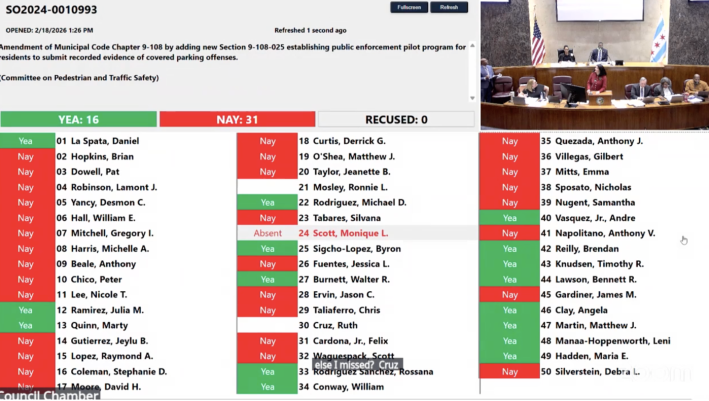
“As a result of us putting that level of pressure on in her last term, it moved [then-mayor] Lori Lightfoot to actually start the Smarts Streets program,” Vasquez said.
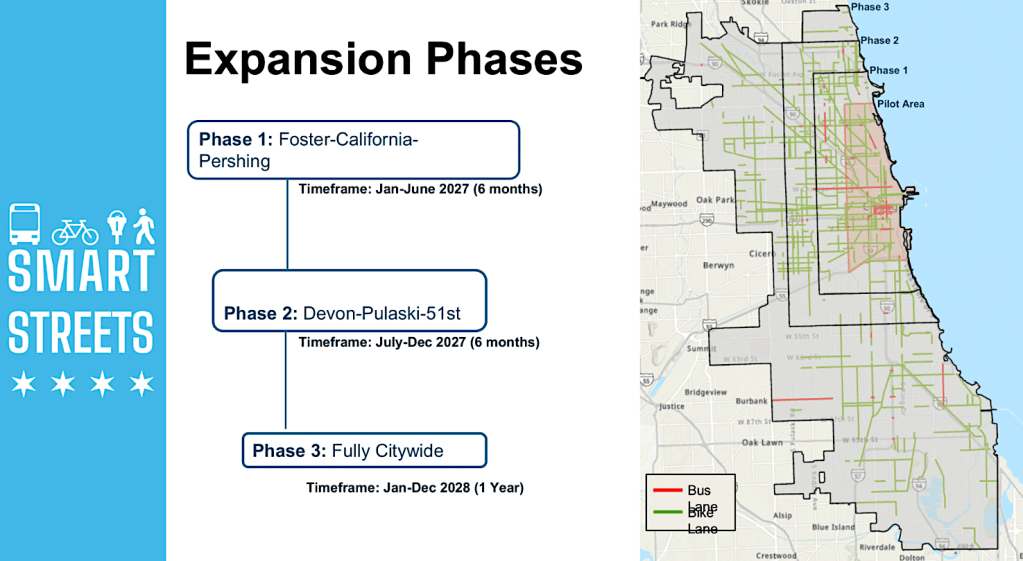
The proposed expansion would happen in three phases, eventually covering the whole city, and would become permanent. In the end, the measure passed unanimously. It could go before the full Council for a final vote on Wednesday, October 14.
Immediately after the meeting, La Spata sent out an email. “Just minutes ago, the Smart Streets Pilot expansion ordinance passed through my Committee on Pedestrian and Traffic Safety,” he said. “This program has issued over 140,000 citations and generated roughly $2 million in revenue. And 82 percent of drivers who get a warning never get a ticket and 64 percent of those that get a first ticket never get a second.”

“Too many friends have been seriously injured, and too many families have lost loved ones. We need to design streets for everyone–especially kids getting around our neighborhoods,” La Spata added.
Thanks to Crain’s Justin Lawrence for his reporting on Divvy issue, which influenced this post. Thanks also to Block Club’s Quinn Meyers, whose reporting on the Smart Streets ordinance was an influence as well.

Did you appreciate this post? If you appreciate Streetsblog Chicago’s reporting and advocacy on local sustainable transportation issues, please consider making a tax-deductible donation here. Thank you!

Read More:
Streetsblog has migrated to a new comment system. New commenters can register directly in the comments section of any article. Returning commenters: your previous comments and display name have been preserved, but you'll need to reclaim your account by clicking "Forgot your password?" on the sign-in form, entering your email, and following the verification link to set a new password — this is required because passwords could not be carried over during the migration. For questions, contact tips@streetsblog.org.