There is a train directly behind this one: A follow-up bill for the NITA Act

By Austin Busch
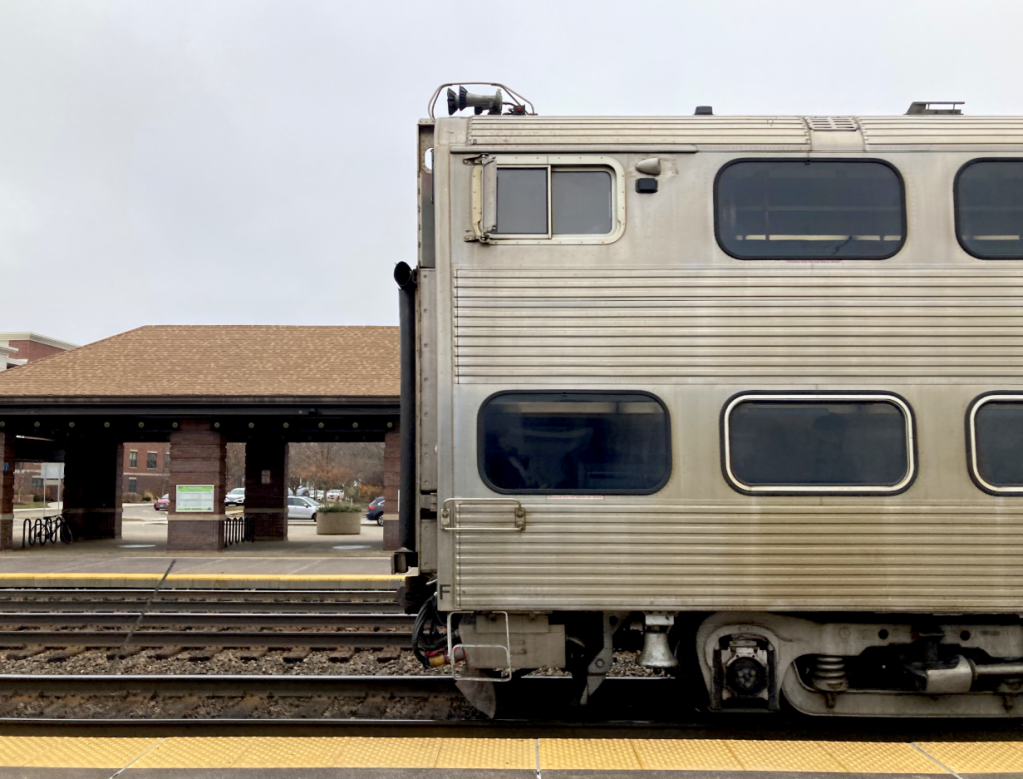
Major legislation in Springfield has a tendency to pass late at night at the end of a session, leaving bills a little rough around the edges. Following the last-minute passage of the Northern Illinois Transit Authority Act in the wee hours of last Halloween, it was expected that a cleanup bill making small adjustments and clerical fixes would be considered in the spring. In the last few days of the Spring 2026 session, the Illinois General Assembly introduced and passed a transit ‘trailer bill’ to make these fixes.
Large, heavily-negotiated bills are often released inside a ‘shell bill’ to expedite passage, replacing everything within an existing stalled bill. Bike advocates may remember this process from last year, when the Idaho Stop bill was shelled out to introduce the NITA Act. The transit trailer bill this year gutted and replaced an “expanded-use antique vehicle” bill.
After shepherding through the NITA Act to passage last fall, Sen. Ram Villivalam and Rep. Eva-Dina Delgado were back as the leading sponsors of the transit trailer bill. If ‘revenue and reform’ were the buzzwords of the NITA act, ‘solidify and streamline’ were the buzzwords to describe the trailer bill.
Some of the updates included in the trailer bill correct typos or redirect misplaced references. One such example: the “Office of Disability of Policy and Planning” will now be the “Office of Disability Policy and Planning.” (Hopefully they haven’t printed business cards yet!) More significant changes included timeline extensions, especially for those with a tight turnaround following the June 1st implementation date of NITA.
Simultaneously with the work occurring in the legislative branch, the executive branch has been preparing for NITA’s implementation. the Illinois Department of Transportation is procuring a contractor to assist with the transition from the Regonal Transportation Authority to NITA. A request for proposals was open to potential contractors through April 27, though a selection has not yet been announced. They will still have until July 1, 2027 to submit the final transition recommendation report, after which the NITA board will have three months to consider and act upon it.

Northern Illinois Transit Adjustments
For major changes made under the original NITA Act, which kicked in earlier this month, you can check our previous deep dive into the legislation. The following are subsequent changes adopted under the trailer bill, HB2335, which will be enacted upon Governor Pritzker’s signature, immediately without a delayed implementation.
Transportation Policy Changes:
- The NITA Law Enforcement Task Force will get an extended timeline, with a preliminary report due by the end of the year, and a final report by March 2027. NITA’s implementation of the report’s recommendations will be moved to September 2027.
- The Transit Integration Policy Development Committee will have until 2028 to complete their work, instead of the six months remaining under the current law.
- IDOT’s statewide multi-modal plan will have to “evaluate project potential for mode shift away from single-occupancy vehicles and commercial motor vehicles,” in addition to other existing considerations.
- IDOT’s transit policy development committee will explicitly look at Bus Rapid Transit coordination, in addition to simple bus priority projects.
Capital Infrastructure Changes:
- New CTA Blue and Green Line station openings will be pushed back from 2029 to 2031. Engineering studies are expected to be completed in 2029 to make this new date possible.
- A geographic error will be fixed concerning a re-opening Blue Line entrance, which is now noted at Lavergne Avenue instead of Leclaire Avenue. (A potential error for the Green Line station still exists, requiring it to be within the Englewood Community Area.)
- The planning study for Joliet Metra Station improvements will have a deadline of December 1, 2030, with the timeline previously being open-ended.
- The service boards will continue to manage capital projects started before 2027, subject to NITA’s review and approval.
Funding Structure Changes:
- Investment income from the State Construction Account Fund will shift to a 90 percent / 10 percent split between NITA and downstate, and be joined by investment income from the Road Fund. The previous 85 percent / 15 percent split was noted as a drafting error. Downstate’s portion of the funds will go towards a biennial call that IDOT will hold for transit capital projects.
- The requirement that farebox recovery account for 25 percent of expenses will not be in effect until Fiscal Year 2028, giving NITA an extra year to stabilize budget planning.
- Advertising revenue, previously included with farebox recovery, will be exempted from the calculation of operating deficits and revenue for downstate transit agencies. NITA will still count advertising revenue as system-generated.
- NITA’s annual budget deadline will move to December 31st, giving an extra month from the current November deadline.
Service Planning Changes:
- The regionwide service plan will be adopted by the end of each year, rather than by September.
- NITA’s strategic plan will have to increase access for transit-dependent populations.
- Paratransit eligibility will continue to be overseen by Pace until switching to NITA in 2030.
Minimum Parking Requirement Changes:
- A “ferry” will be defined, somewhat recursively. The Chicago Water Taxi would likely meet this definition, though it doesn’t travel to areas outside where the act already applies due to other nearby modes.
- A qualifying bus “hub” will be clarified as an intersection of at least two routes with 15-minute peak-hour frequency or better. This may result in less areas affected than more liberal interpretations of the existing definition that have been mapped, but will provide a clearer definition for developments invoking the statute.
Board Changes:
- A second mayoral appointment to the CTA’s board will be added to the double-duty roster appointed to the NITA board, rather than having separate individuals on the NITA and CTA boards. The mayor of Chicago will still have the same number of appointments on each board.
- Transit board members will not be allowed to be employees of the state or a unit of local government, employees of a service board, or a paid elected official (except by a school board).
- Double-duty board members will get a $5,000 pay increase, for an annual salary of $25,000. Single-board members will still be paid a $15,000 annual salary.
- Initial terms on the Pace board will be aligned with the Metra board, affecting the DuPage County director (now five years) and the Will and Kane County Directors (now three years).
Labor and Contracting Changes:
- The cost threshold will double to $200,000 for the NITA board to review employment contracts.
- A requirement that construction contracts go to “responsible bidders” will be added, ensuring bidders comply with the Prevailing Wage Act, Equal Employment Opportunities, and the Department of Labor’s Bureau of Apprenticeship and Training.
Inflated gas tax revenue diverted
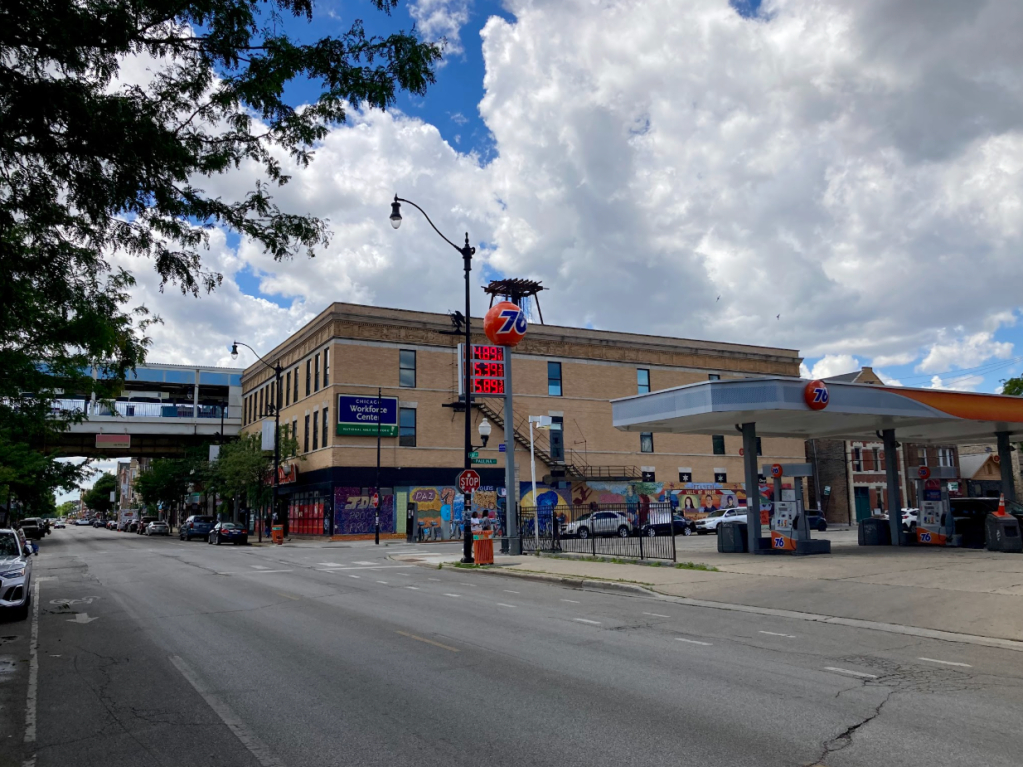
The state opted to balance the budget by transferring $150M from the Road Fund into the General Revenue Fund, rather than the Public Transportation Fund where it was due to flow. The Road Fund has seen higher-than expected revenue, as the state sales tax on gasoline is indexed to the price, rather than the volume, of gasoline. The Illinois Clean Jobs Coalition and RTA Chairman Kirk Dillard both warned that doing so again in future years could destabilize long-term funding for transit in Illinois.
Suspending gas taxes to offset high fuel prices has been discussed nationally in recent months, though experts warn it may do more harm than good. While Illinois has not opted to suspend the gas tax altogether (like neighboring Indiana has done), drivers will not see an increase in the Motor Fuels Tax on July 1, which was stopped from an automatic increase of 1.3 cents per gallon.

On November 12, SBC launched our 2026 fund drive to raise $50K through ad sales and donations. That will complete this year’s budget, at a time when it’s tough to find grant money. Big thanks to all the readers who have chipped in so far to help keep this site rolling to the end of 2026! Currently, we’re at $34,036 with $15,964 to go, ideally by the end of June.
If you value our livable streets reporting and advocacy, please consider making a tax-deductible gift here. If you can afford a contribution of $100 or more, think of that as a subscription. That will help keep the site paywall-free
Streetsblog has migrated to a new comment system. New commenters can register directly in the comments section of any article. Returning commenters: your previous comments and display name have been preserved, but you'll need to reclaim your account by clicking "Forgot your password?" on the sign-in form, entering your email, and following the verification link to set a new password — this is required because passwords could not be carried over during the migration. For questions, contact tips@streetsblog.org.