CTA revises ridership upward by 19 million trips after methodology update

By Ellen Steinke
Chicago’s transit use may be more robust — and more geographically unequal — than previous public data suggested.
That was one of the clearest takeaways at the May 5th Chi Hack Night as CTA officials spent more than an hour walking transit advocates, civic technologists, and curious Chicagoans through a major overhaul of how the agency counts ridership.
The headline number was striking: CTA revised its 2025 ridership totals upward by roughly 19 million rides after implementing a new methodology for counting trips on buses and rail. But the more interesting story may be why those numbers changed and what the updated data says about who uses transit most. Buses in many South and West Side neighborhoods appear significantly busier than previous public data indicated.
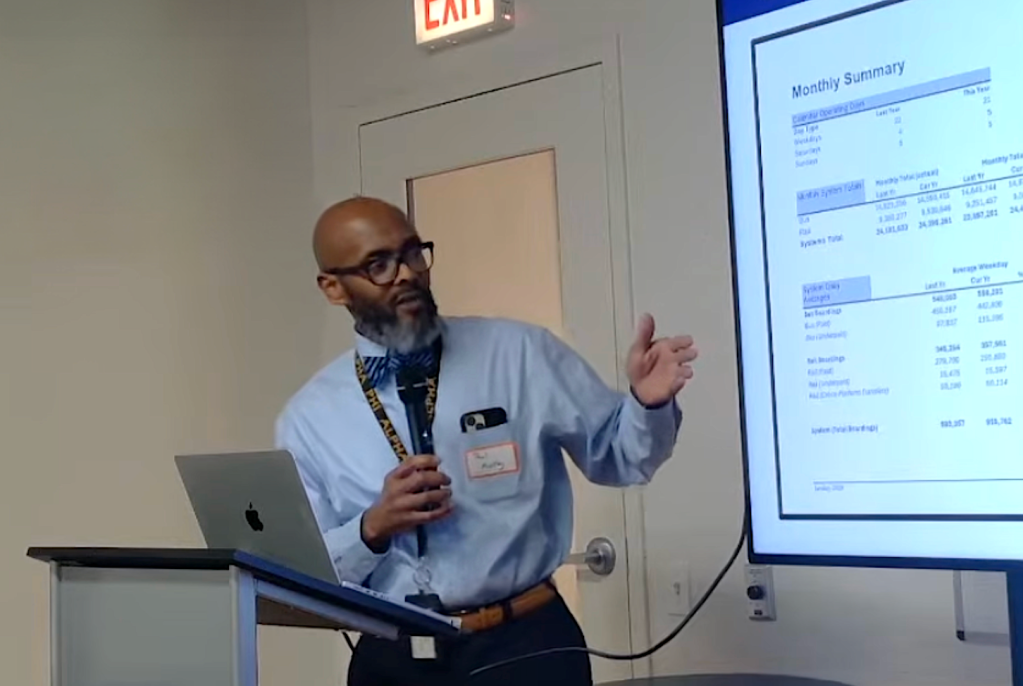
The presentation drew one of the larger recent Chi Hack Night crowds, with organizers estimating roughly 50 attendees, including a sizable number of first-time participants who said they came specifically for the CTA discussion. And unlike the polished, tightly scripted public presentations agencies often give, this one felt unusually candid and technical.
CTA analysts Scott Wainwright, Paul Murray, and Kevin Li, openly discussed previous flaws in counting methods, limitations in farebox systems, uncertainty in data collection, and the tradeoffs involved in measuring transit use across a system that carries hundreds of millions of riders annually. At several points, officials encouraged researchers and advocates to revisit earlier analyses because the underlying ridership data itself had changed.
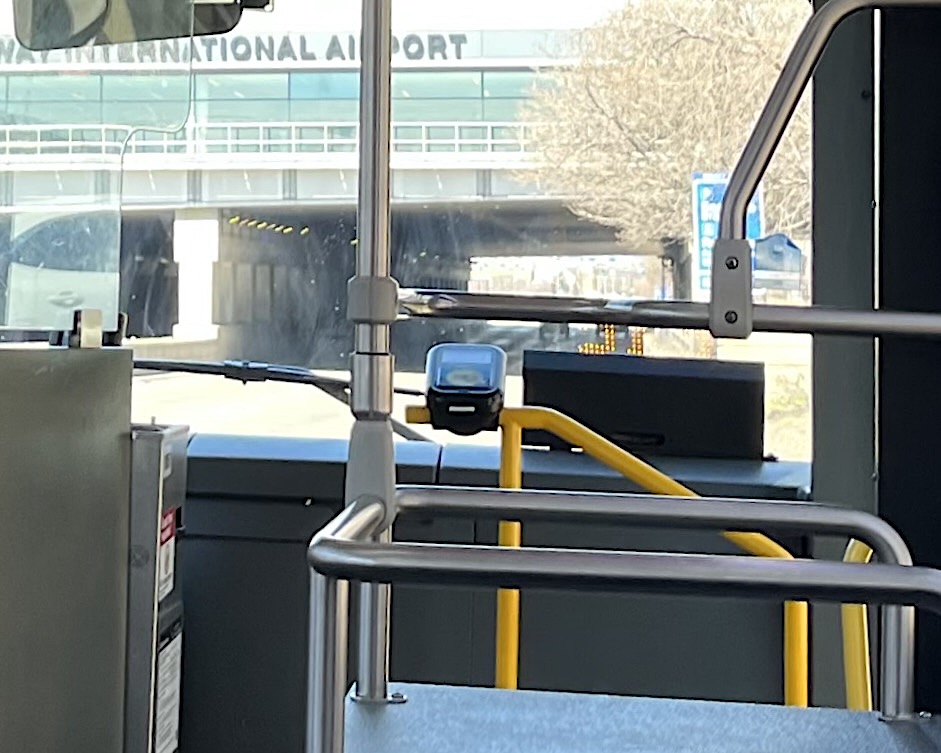
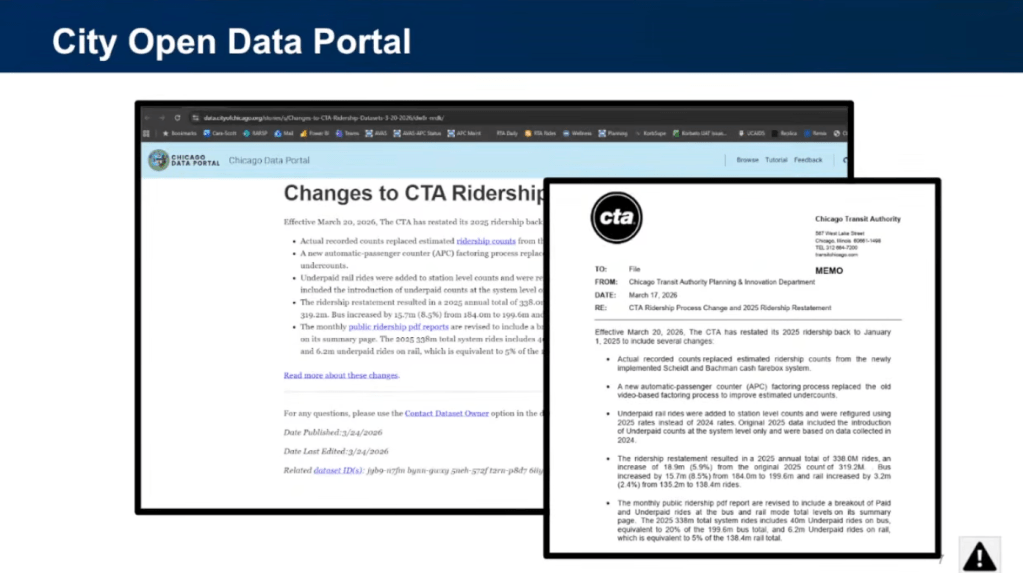
The changes stem largely from two things: new fareboxes and a new counting methodology using automatic passenger counters, or APCs. These infrared sensors and cameras mounted near bus doors count riders boarding and exiting vehicles regardless of whether they pay a fare and help paint a more accurate picture of ridership.
CTA planners explained that older methodologies relied more heavily on farebox data and manual video review, which likely undercounted actual usage, especially on routes where riders boarded through rear doors, paid cash, or did not tap Ventra cards consistently.
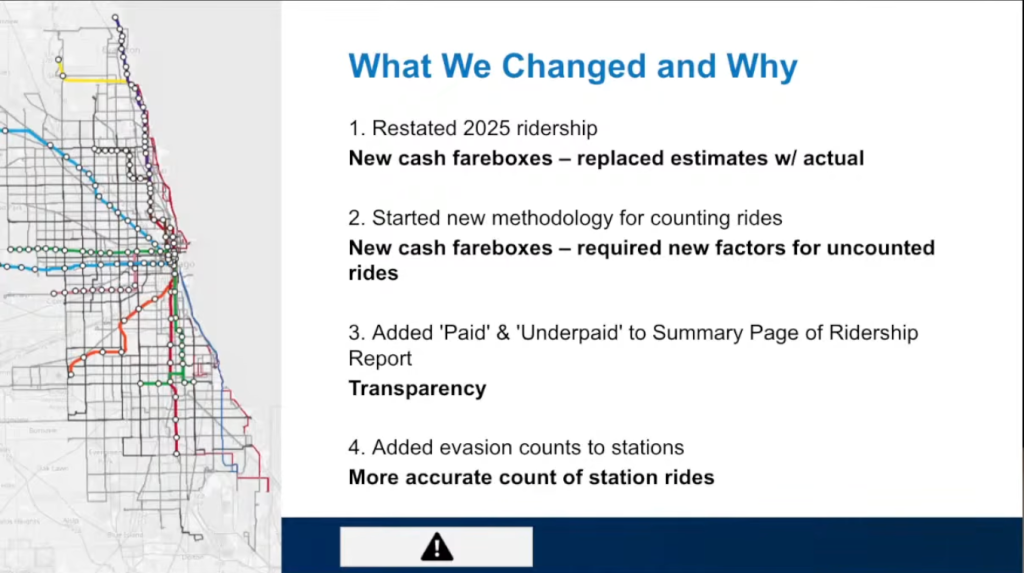
One slide titled “What We Changed and Why” summarized the methodology overhaul succinctly:
- restated 2025 ridership,
- started a new methodology for counting rides,
- added “Paid” and “Underpaid” categories to reports “for transparency,”
- and added evasion counts to station-level ridership totals.
The result is a transit system that appears significantly busier than many Chicagoans may have realized.
Some of the largest upward revisions occurred on heavily used South and West Side bus corridors. According to CTA’s presentation, the 79th Street bus alone gained more than one million rides after the methodology update, roughly a 22 percent increase. Other routes including the 87th, 63rd, and Cottage Grove buses also saw ridership increases exceeding 20 percent.
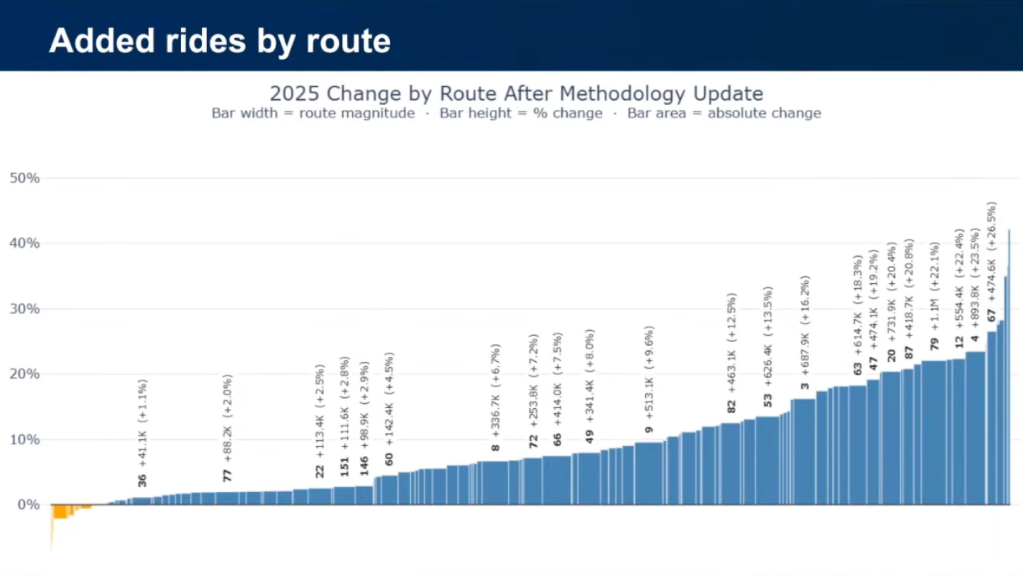
In other words, the routes serving some of Chicago’s most transit-dependent communities may also have been among the system’s most undercounted. This has important implications for how Chicago talks about transit recovery.
For years, public discussions around transit have often focused on downtown office commuting and whether ridership has “returned” after the pandemic. But the revised CTA data paints a more geographically uneven picture. While Loop commuting patterns remain altered by remote work, bus usage across many neighborhoods appears far stronger than previously understood.
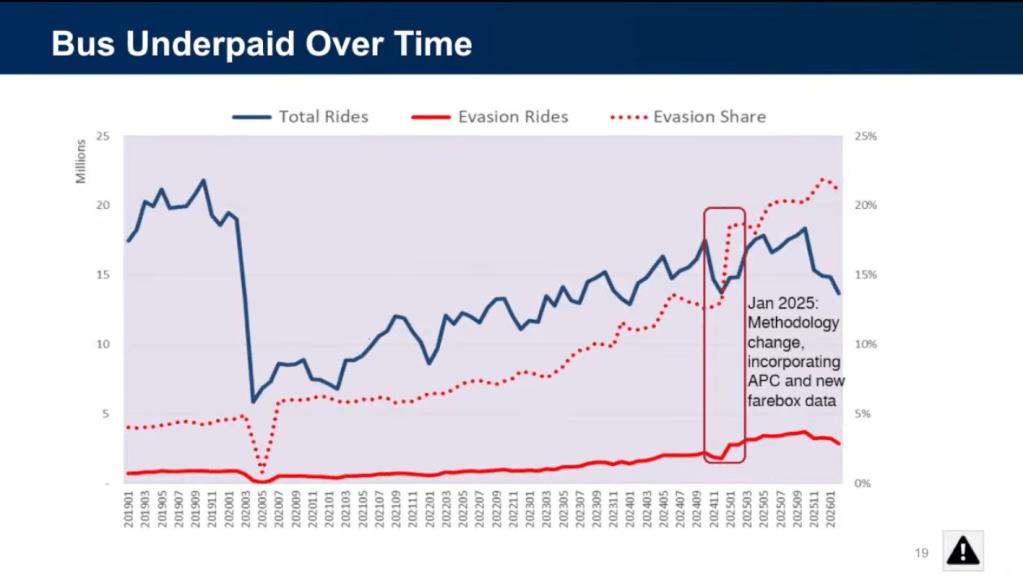
The updated data also revealed significant increases in what CTA now categorizes as “underpaid” rides, or trips where riders either paid reduced fares, insufficient fares, or no fares at all. CTA estimates roughly 20 percent of bus rides and around 5 percent of rail rides now fall into that category.
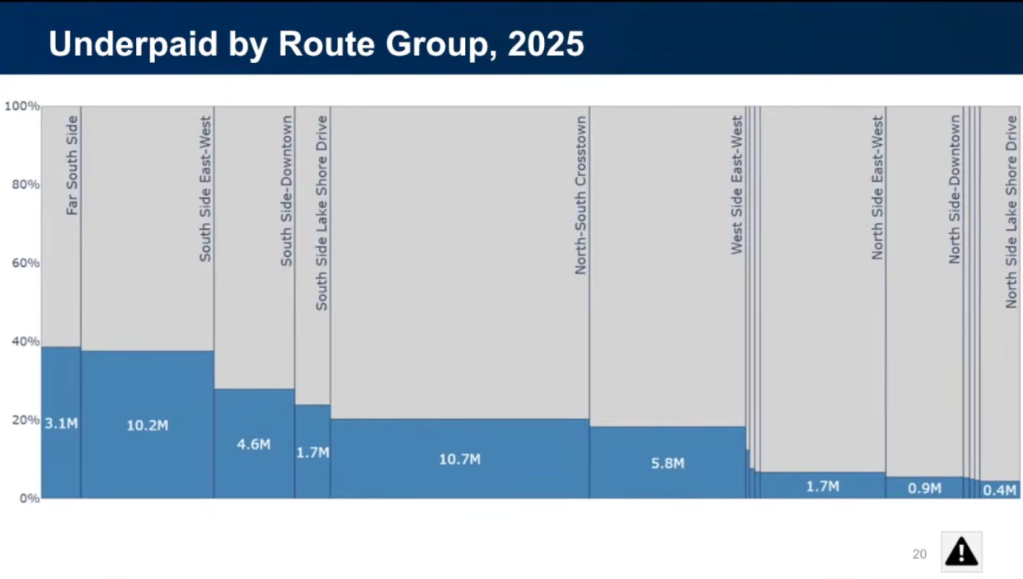
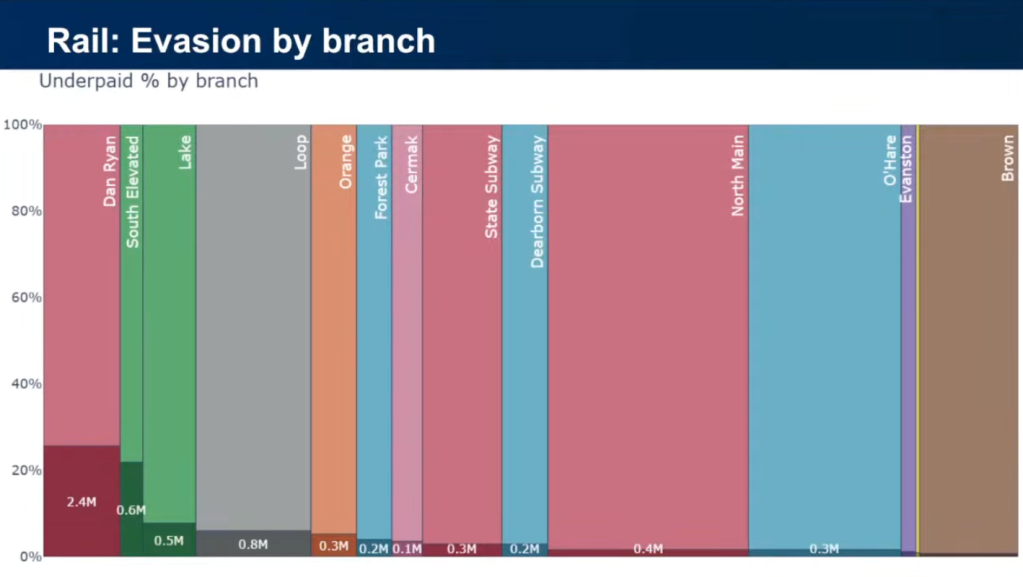
But notably, agency staff framed this less as a law enforcement issue and more as a planning and affordability challenge. Presenters repeatedly emphasized that fare evasion is concentrated in lower-income neighborhoods.
At several points, the discussion shifted toward broader questions about equity, service planning, and transit funding. CTA officials noted that while fare revenue matters financially, rider taps also provide essential planning data that helps the agency understand where riders are traveling and where service is needed most.
“We’re planners,” Wainwright explained. “We really want the taps. We want to see where people are and where they’re going, so we can plan the service for them.”
The agency also discussed potential future low-income fare programs and acknowledged that affordability pressures likely play a role in rising underpayment rates.
Still, the overall tone of the meeting remained pragmatic rather than punitive. Rather than presenting the revised data as evidence of failure, CTA staff framed the methodology update as part of a broader effort to improve transparency and produce more accurate ridership estimates in a post-pandemic transit context.
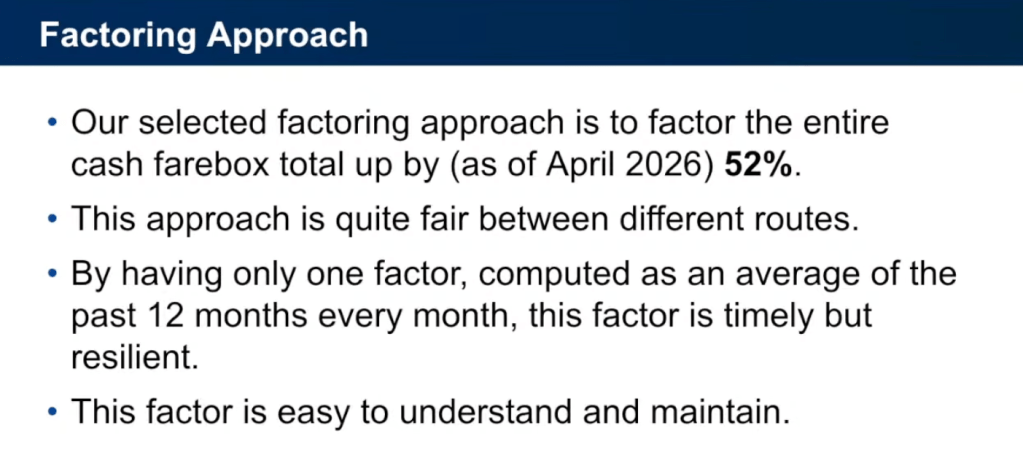
A notable moment came during a discussion of the agency’s APC-based “factoring” methodology. Rather than deploying an opaque machine-learning system, CTA planners described intentionally choosing a simpler, more understandable approach that could be publicly explained and maintained over time while still remaining highly accurate.
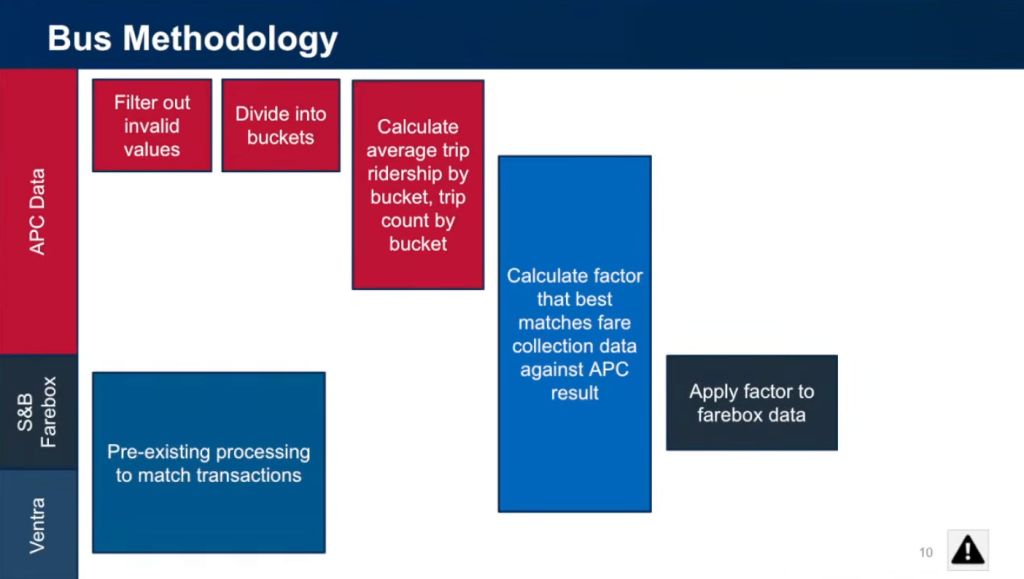
Another slide highlighted that the methodology documents themselves had been uploaded to the city’s open data portal for public review.
Public agencies often have incentives to avoid discussing uncertainty, revisions, or imperfect data. Monday’s presentation took the opposite approach. CTA employees spent over 40 minutes fielding detailed questions about farebox recovery ratios, route-level disparities, station counting methods, transfer modeling, service reliability, and enforcement strategies.
The CTA’s presentation was not a perfect portrait of the transit system. If anything, the presentation underscored how difficult transit measurement actually is in a sprawling, evolving urban network shaped by changing technology, post-pandemic travel behavior, and persistent inequality. But it also demonstrated an increasingly rare instance in which a public agency treated residents, advocates, and researchers like collaborators rather than adversaries.
And perhaps most importantly, the presentation suggested something many transit riders already intuitively understood: Chicago’s buses remain heavily used infrastructure, especially in communities where transit is not optional.
See the full presentation on Chi Hack Night’s YouTube Channel.

On November 12, SBC launched our 2026 fund drive to raise $50K through ad sales and donations. That will complete this year’s budget, at a time when it’s tough to find grant money. Big thanks to all the readers who have chipped in so far to help keep this site rolling to the end of 2026! Currently, we’re at $32,721 with $17,279 to go, ideally by the end of May.
If you value our livable streets reporting and advocacy, please consider making a tax-deductible gift here. If you can afford a contribution of $100 or more, think of that as a subscription. That will help keep the site paywall-free for people on tighter budgets, as well as decision-makers. Thanks for your support!
– John Greenfield, editor
Streetsblog has migrated to a new comment system. New commenters can register directly in the comments section of any article. Returning commenters: your previous comments and display name have been preserved, but you'll need to reclaim your account by clicking "Forgot your password?" on the sign-in form, entering your email, and following the verification link to set a new password — this is required because passwords could not be carried over during the migration. For questions, contact tips@streetsblog.org.