The War on Cars’ Sarah Goodyear and Doug Gordon answer the question “What’s one thing we can do to get to that ‘Life after Cars’ for everybody?”

If there’s one book out there that aligns with Streetsblog’s mission of promoting less auto-centric, more people-friendly streets in order to help improve the world, it’s “Life After Cars: Freeing Ourselves From the Tyranny of the Automobile.” In fact, one of the co-authors of the book is Streetsblog founder Aaron Naparstek, who was part of the podcast The War on Cars with the book’s other authors, Sarah Goodyear, who’s also written for Streetsblog, and Doug Gordon, aka blogger “Brooklyn Spoke.”
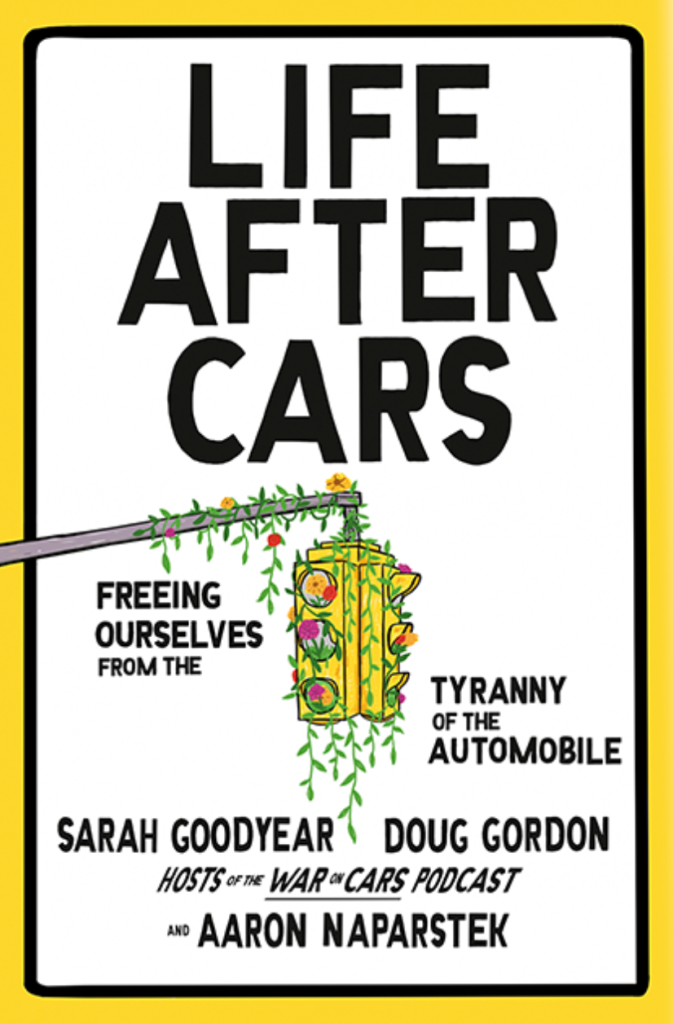
“Cars as we know them today are unsustainable – but there is hope,” says the webpage for the book, out on Penguin Random House. “Life After Cars will arm readers with the tools they need to implement real, transformative change, from simply raising awareness to taking a stand at public forums.”
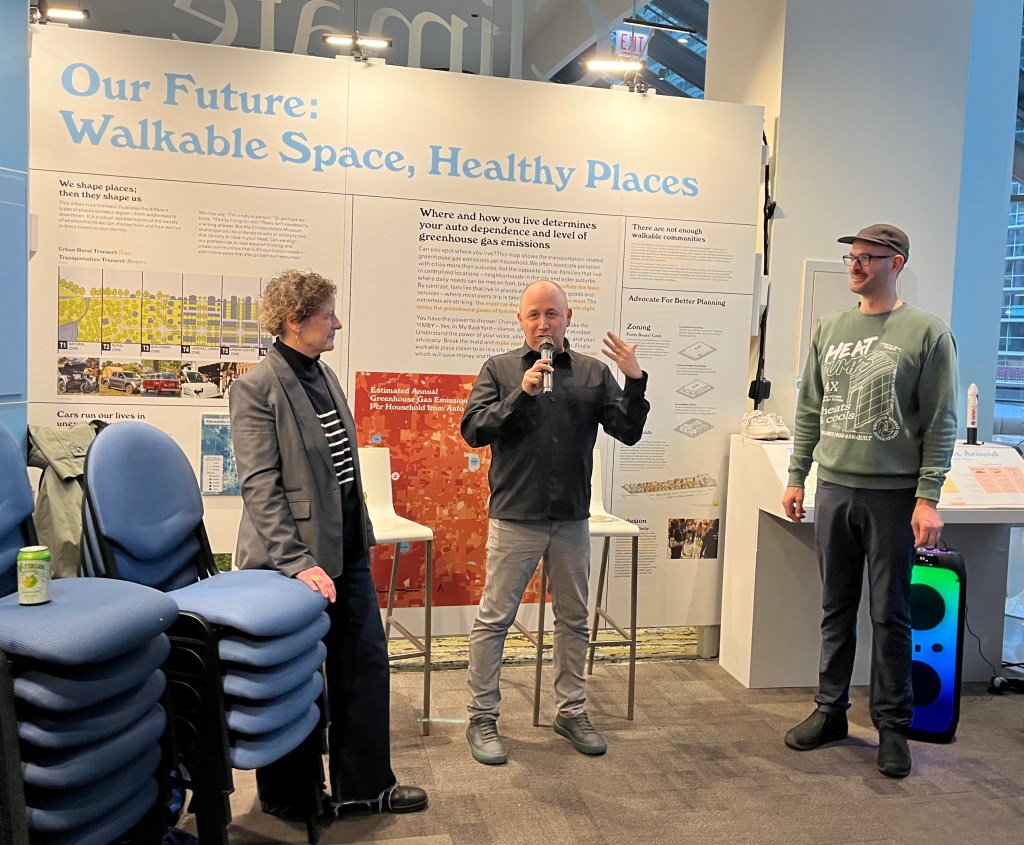
Goodyear and Gordon are touring in support of the book, with dozens of stops all over North America, including three in Chicagoland. These have included last Friday at the Climate Action Museum in the West Loop; Saturday Benito Juarez High in Pilsen with CTA Acting President Nora Leerhsen, hosted by Better Streets Chicago; plus a gathering this evening at Sketchbook Brewing in Evanston.
I dropped by Friday’s event, moderated by CAM (and Streetsblog Chicago) cofounder Steven Vance, which drew dozens of climate and sustainable transportation advocates to the museums scenic riverside location. During the Q & A section, Chicago Critical Mass founding parent Michael Burton asked the authors for some words of wisdom.
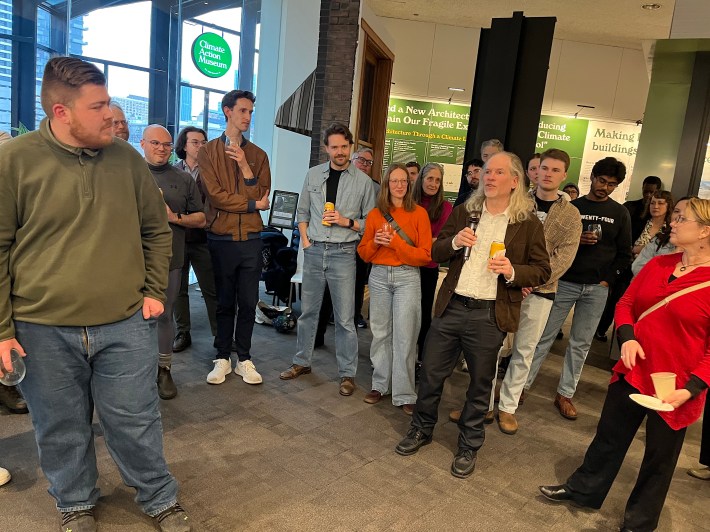
Michael Burton: “It’s great to be in a room with so many activists on post-car living. It’s really exciting. I feel the energy in the room, and I love what you guys are doing and what you bring to this movement, and just in your travels and in your work. We’d love to hear what’s one thing us activists can do to get to that ‘Life After Cars’ for everybody?”
Sarah Goodyear: I say this in every place, and it’s really simple, and you’re doing it right now, but keep doing it, is organize, organize, organize. And I mean that. If you came here and you are not a member of an organization that does this work in Chicago, what’s the name of that organization in Chicago?
People in the crowd: Better Streets Chicago. [BSC Executive Director Kyle Lucas was in the audience. Other key sustainable transportation advocacy organizations in the region include the Active Transportation Alliance, Ride Illinois, Chicago Bike Grid Now!, and Commuters Take Action.]
SG: 23 cities? It’s getting a little fuzzy. “Better Transit Action Streets…” So if you’re not a member, consider becoming a member of that. Join up here at the climate museum and do whatever it takes… I guess you can just be a cofounder, right? [The audience laughed.]
But the reason it’s so important to organize is that what we need to change is we need to change the politics around our issues. And in order to do that, first of all, we need to elect politicians who care about this stuff. But we also need to present ourselves as a constituency and not as a problem. And that is really, really important, to show up and say, “Hey, we’re the people who live in your district, and we want fewer cars and more other options for how to get around. And we want to be safe.”
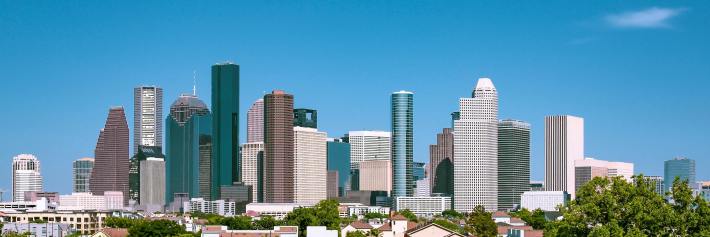
And what we have seen in the cities that we’ve gone to, including real car… Well, places that are not one of the two best cities [New York and Chicago], like Houston, Texas, God bless them. And they said they’re starting to have elected officials who get it. And it’s because people have been organizing, organizing, organizing.
So I’m not a joiner. I hate joining things. I am not good in groups, and I’m terrible at it. But you have to join things to get power, because then when the politicians start seeing you as constituents that need service, and not as whiny occasional things that they have to swat away while they’re serving some other constituency, that’s what we need. So that’s my answer.
Doug Gordon: Yeah, to jump off of that, I would say, just through a cycling lens, for a long time, elected officials saw cyclists as a whiny minority to placate. And we need to see them to see cycling as a thing to cultivate, right? It’s not about people like me who feel confident in traffic. Is about the next generation, the generation after that, younger people, kids.
So I think to Sarah’s point, that’s we have to present ourselves as. Look how many people are in this room. You know, if half of you showed up at an alderperson’s campaign office and said, “I’m going to help knock on doors,” you probably would make a huge difference in that election, if it’s anything like New York City, where elections hinge on maybe a few hundred, maybe a couple thousand votes. So I think that’s important.
And I think just the mainstreaming of our issues is really important. You’ve got lots of people in media, cultural figures, elected officials, who are getting around my bike, living car free, who want to live in dense neighborhoods where they can walk, or their kids can walk. So I think just continue to make it normal. That’s really big issue.
And like Sarah was saying, we were in Memphis, we were in Houston, we were in Miami, just some of the most car-centric places you can imagine, the polar opposite of New York and Chicago. And we’ve had an elected official at, nearly every single event. We’ve had millennial or younger, ’cause we’re old [the crowd laughed], we had a state [senator in the Houston area], Molly Cook who got on stage with us and was like, “Yeah, f— cars.” In Texas, more radical than us.
So we don’t think that would have happened without all of us, over the years, mainstreaming these issues.
Read more about “Life After Cars” here.

On November 12, SBC launched our 2026 fund drive to raise $50K through ad sales and donations. That will complete this year’s budget, at a time when it’s tough to find grant money. Big thanks to all the readers who have chipped in so far to help keep this site rolling to the end of 2026! Currently, we’re at $30,316 with $19,684 to go, ideally by the end of April
If you value our livable streets reporting and advocacy, please consider making a tax-deductible gift here. If you can afford a contribution of $100 or more, think of that as a subscription. That will help keep the site paywall-free for people on tighter budgets, as well as decision-makers. Thanks for your support!
– John Greenfield, editor

Read More:
Streetsblog has migrated to a new comment system. New commenters can register directly in the comments section of any article. Returning commenters: your previous comments and display name have been preserved, but you'll need to reclaim your account by clicking "Forgot your password?" on the sign-in form, entering your email, and following the verification link to set a new password — this is required because passwords could not be carried over during the migration. For questions, contact tips@streetsblog.org.