“Being right doesn’t win”: Ride Illinois hosts Q & A with advocate and author Carter Lavin

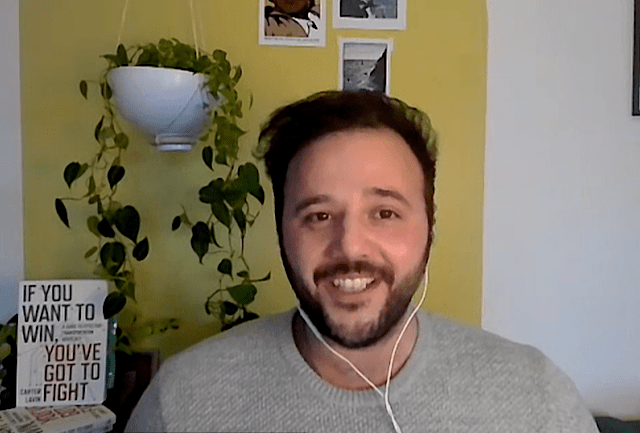
Bike/walk/transit advocacy – like any advocacy – is ceaseless and often complicated work. As an advocate on climate, energy and transportation matters for over 20 years, Bay-area-based Carter Lavin knows this well. So well, in fact, that he’s written a handbook on the subject entitled “If You Want to Win, You’ve Got to Fight.” For the book, Lavin drew on his extensive experience campaigning at the local and state levels, and interviewed fellow advocates from across the country about their challenges, triumphs, and tactics to improve transportation infrastructure and safety in their communities.
Ride Illinois hosted a webinar with Lavin on Thursday evening to discuss his book and answer questions from local sustainable transportation boosters. Ride Illinois Development and Membership Coordinator Savannah Curry moderated the event.
Ride Illinois Executive Director Dave Simmons kicked things off with a bit of good news at the state level, sharing a photo taken earlier in the day of himself at a press conference hosted by Secretary of State Alexi Giannoulias. Ride Illinois has been focused on making sure new legislation proposed to regulate electric bikes and the higher-powered e-motos is, according to Simmons, “sensible and not too over-reaching.”
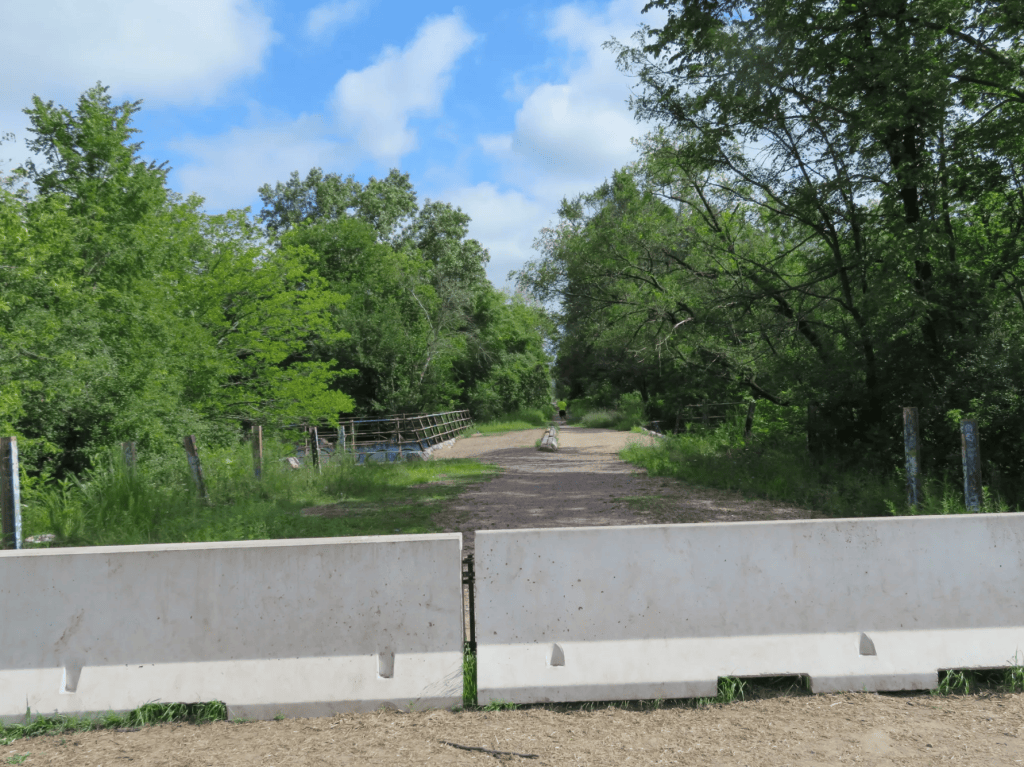
For example, in the interest of safety, some Chicago suburbs like Highland Park have thrown out the baby with the bath water by banning all e-bikes from off-street trails. That includes not just motorcycle-like vehicles, but also Divvy-style e-cycles whose electrical assist tops off at 20 mph.
Lavin then introduced himself and gave a brief overview of his book. He said that he found in his years of advocacy, which began when he was in high school, the same skill set was required if one was advocating for solar policy or bike lane installation. He started training bike and transit advocates, and leads an advocacy group spanning nine counties in the Bay area. “We are right, but being right doesn’t win,” he said. “It takes more.”
Lavin added that when he began writing the book, he was aware that advocacy isn’t a one-size-fits-all formula. “I knew what worked for me, but a big part was interviewing advocates from across the country, including Dave from Ride Illinois,” he said. “I tried to find what was true everywhere and focus on that in the book.”
“If You Want to Win” is divided into eight chapters. “The first chapter is the most controversial,” Lavin said. “It says everything you want is a political desire, because it impacts others. And often what we want is for others not to impact us. Chapter one says that we are technically radical.”
Chapter two covers how to translate the desire for change into clear demands of politicians and how to get other constituents on board. The third chapter contextualizes advocacy in different places. “[The northern Chicago suburb of] Libertyville is different from Chicago and definitely different from Maine,” Lavin said. “Chapter three talks about how to analyze these things at county or state level. People often look at what happens in other places and ask, ‘Why can’t that happen here?’ It’s like running a marathon. It can be done but it takes training.”
Chapters four and five provide guidance on building coalitions and thinking broadly about groups that might support transit advocate agendas. Lavin gave the example of a Catholic Church that signed on to a street safety campaign. “They don’t want people being hit by [drivers],” he said. “Learning how to work together is a skill that takes effort. We bike people can get in our own heads.”
The final chapters cover tactics and their potential outcomes – desired and undesired – as well as effective escalation methods when campaigns go unheard. The floor then opened for attendee questions.
One attendee asked what win got Lavin hooked on advocacy. Lavin said that, though it wasn’t a win, he was encouraged by an effort he led, starting in late 2019, to improve bus service across the Bay Bridge. He responded to a social media call from the now-attorney general of California for policy ideas. The director of BART messaged him directly that it was a good idea and the next thing he knew he was drafting policy. Ultimately the legislation didn’t pass due to several issues, including the COVID pandemic, but Lavin said it encouraged him to continue taking action. “There’s a lot of political will from people who want the same things we do. If you’re willing to do the work, no one will ask ‘Where’s your degree?'”
Randy Faust of Ride Illinois asked about advocating effectively in rural areas, where there is less density and visibility of people on bikes. Lavin said to start with small, inexpensive asks – for example a bike rack at a grocery store – and build support. “You don’t need to start with the hardest fight,” he said.
Another attendee asked what to do when local governance isn’t taking action on an existing bike/ped plan. “This is a classic,” Lavin responded. “One person is easy to ignore. It’s hard to ignore 100 people. It’s really hard to ignore 1,000 people. Assuming the plan is still good, start a petition in your community. Point out that money was spent on a plan. Make the mayor and local government ignore a bunch of people. Then you can draw attention to the fact the mayor is ignoring community members.””
Lavin reiterated the value of being loud when it comes to the size of asks. “You don’t get what you don’t ask for,” he noted “You always want politicians to be in the hot seat. They should always be thinking about what you want. If one year, you’re quiet after you were loud, they won’t thank you for being quiet.” He added that asking for more than you expect is a form of negotiation. He sets his ceiling at what he envisions his allies would say is pushing too hard.
Lavin closed by thanking the attendees for their work in their communities, stating the importance of local wins to build momentum for change at state and federal levels. “The more we build to win locally the more successful we’ll be when it comes time to yell at Washington DC.”
Read more about “If You Want to Win, You’ve Got to Fight.” here.

On November 12, SBC launched our 2026 fund drive to raise $50K through ad sales and donations. That will complete next year’s budget, at a time when it’s tough to find grant money. Big thanks to all the readers who have chipped in so far to help keep this site rolling all next year! Currently, we’re at $20,237 with $29,763 to go, ideally by the end of February.
If you value our livable streets reporting and advocacy, please consider making a tax-exempt gift here. If you can afford a contribution of $100 or more, think of it as a subscription. That will help keep the site paywall-free for people on tighter budgets, as well as decision-makers. Thanks for your support!
– John Greenfield, editor

Streetsblog has migrated to a new comment system. New commenters can register directly in the comments section of any article. Returning commenters: your previous comments and display name have been preserved, but you'll need to reclaim your account by clicking "Forgot your password?" on the sign-in form, entering your email, and following the verification link to set a new password — this is required because passwords could not be carried over during the migration. For questions, contact tips@streetsblog.org.