Divvy Lowers Long-term Cost of D4E Memberships, Relaxes Membership Rules

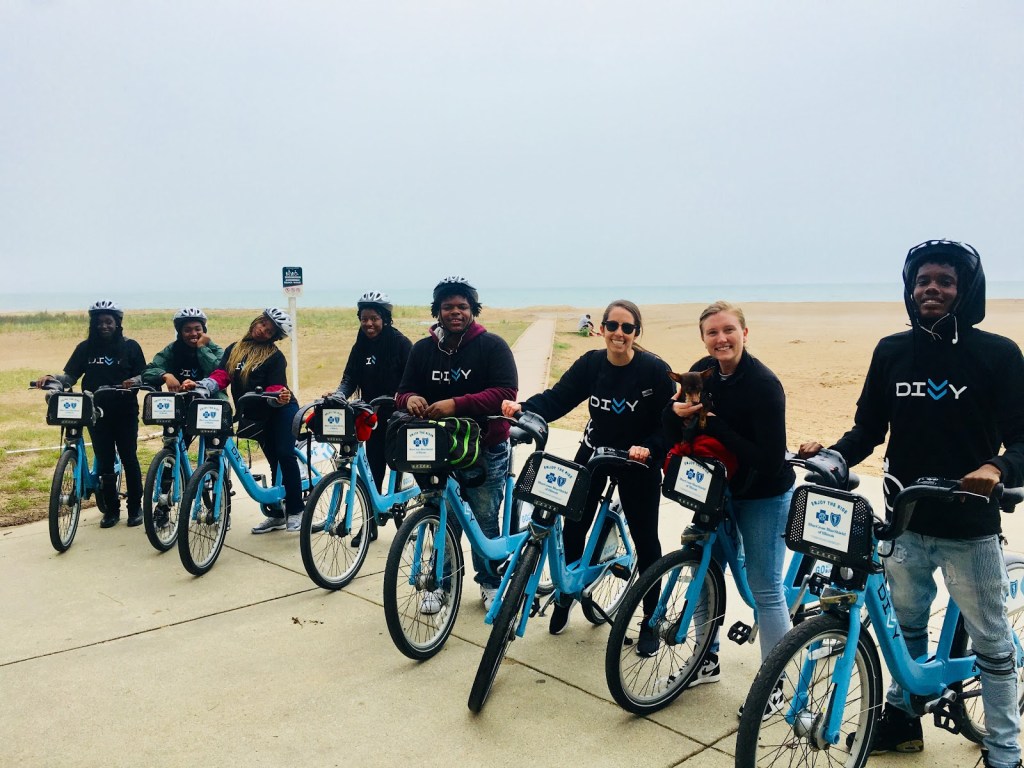
The Divvy for Everyone (D4E) program was already a great deal, but the city just made it more affordable Chicagoans who try bike-share via the $5 one-time annual memberships to sign up for additional years if they find the service to be beneficial. The discounted memberships are available to individuals who make less that $35,310 a year and, unlike standard memberships, no credit card is needed to participate.
Previously the second year of a D4E membership cost $50 and the third year was the full $99 price, which is still a good value (compared to $1,260 for a year of CTA passes), but could represent a major expense for a person on a fixed income. Under the new pricing scheme the first year of a D4E membership is $5, the second year is $25, the third is $50, and the fourth is $75, and the price is supposed to never go up after that.
Divvy is also expanding the options for qualifying for the program. Previously a check stub or zero-income affidavit was required to prove eligibility. Under the new rules recipients of SNAP, WIC, LIHEAP, or public housing are also automatically eligible to join. According to Divvy, the pricing and eligibility changes were made based on feedback from residents collected by Divvy’s community outreach team.
The D4E program has been funded by a grant from the Better Bike Share Partnership, as well as sponsorship revenue from Blue Cross and Blue Shield of Illinois. As such, no taxpayer money has been used to pay for the subsidized memberships.
D4E is a good example of how public transportation costs should function. When people of all income levels pay the same price, lower-income residents wind up paying a much higher percentage of their income than affluent people. Since better transportation access makes it easier to get to work and educational opportunities, raising a person’s earning potential, it’s likely a net win for society when the cost is reduced for those who may struggle to make ends meet. It would be great to see a similar approach taken with local transit fares.
Since Divvy for Everyone launched in 2015, more than 3,500 residents have signed up, with more than 250,000 rides taken. And while, according to a 2017 survey, about 84 percent of regular Divvy members are white, 72 percent of D4E members are people of color. According to Divvy, participation in D4E is highest on the South and West sides.
That’s not to say that the program is perfect. As Streetsblog readers have pointed out, the rules require people to sign up in person at one of five LISC Financial Opportunity Centers, and none of them are north of Armitage. Moreover, residents can only enroll on Tuesday, Wednesday, or Thursday between noon and 5 p.m. — a mere 15 hours a week — which is challenging for folks who work 9-to-5. Still, the new pricing and eligibility rule is a step in the right direction for making D4E more accessible.

Read More:
Streetsblog has migrated to a new comment system. New commenters can register directly in the comments section of any article. Returning commenters: your previous comments and display name have been preserved, but you'll need to reclaim your account by clicking "Forgot your password?" on the sign-in form, entering your email, and following the verification link to set a new password — this is required because passwords could not be carried over during the migration. For questions, contact tips@streetsblog.org.