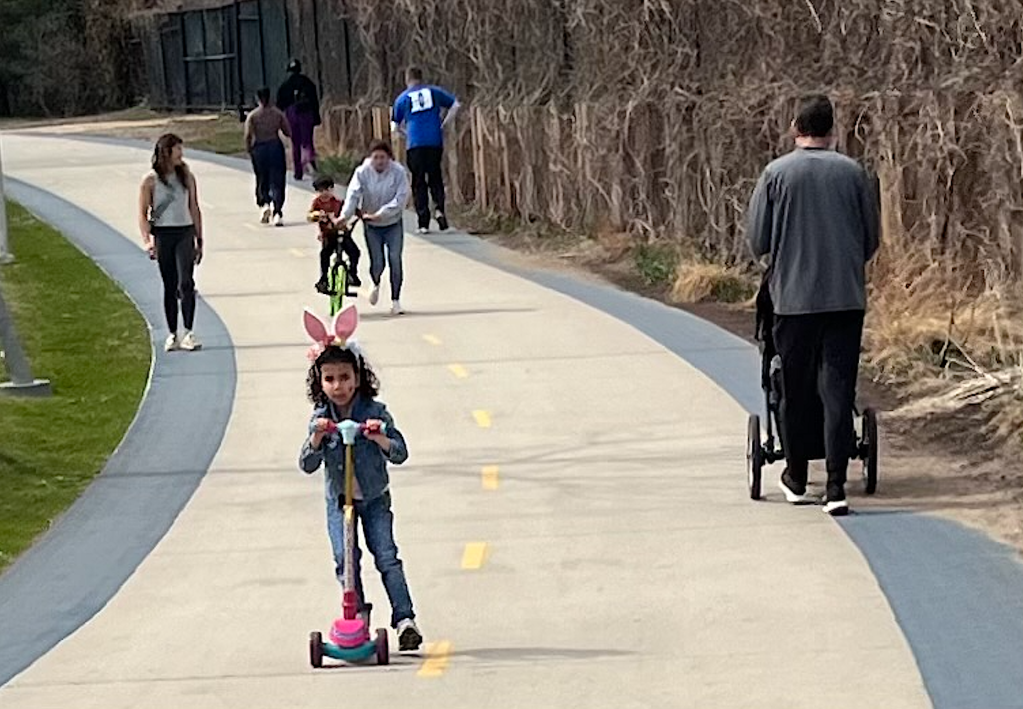
Car-free paths give kids the freedom to risk making mistakes. That’s one reason we need to build more off-street trails.

By Jeremy Wolff
Jeremy is a Chicago native who has previously written about for Streetsblog Chicago about delivery and curb management policies. His entrepreneurial projects have included building an indoor playground in Avondale called Playbound, which eventually became Wonderplay. Folow him on Twitter at Urban Wolf.
I was 30 years old, riding a longboard and pulling a rope while working as a childcare provider. Tied to the other end of the rope was a wagon and in it sat a five year old named “Cole” (kids’ names have been changed in this article), who had a visual impairment, wearing headphones and holding a toy Batman action figure.
Accompanying us was Cole’s twin brother “Kaden” on his bicycle. Kaden would race ahead and shout back about things he saw. It wasn’t the smartest plan, but boy, did we have fun. Breeze through our hair, laughing and smiling, we all enjoyed the thrill of rolling on wheels towards our prize, Walsh Park in Chicago’s Bucktown neighborhood, a super fun playground. Our excursion was made possible by The 606, aka the Bloomingdale Trail, an old elevated rail line converted to a car-free corridor through the city.
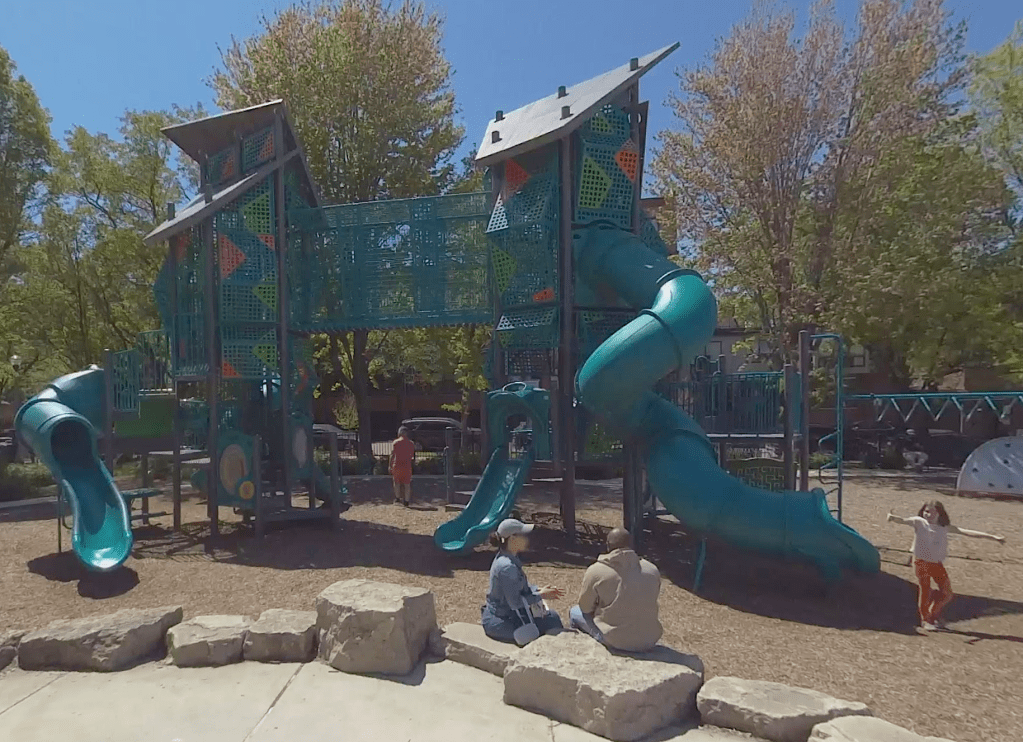
Kaden had just learned to ride a bike two days before. The trail was something he could navigate with limited experience. Because the path was closed to drivers and elevated over intersections, there was freedom to make mistakes, and mistakes were made. Kaden sometimes stopped unexpectedly to catch his breath. He also took downhills a little quickly, and sometimes crashed into the soft rubber running surfaces that line the bike path. He was able to get back up and continue onward. The trail offered something kids rarely get anymore: the freedom to make mistakes safely.
America has many similar corridors that separate trail-goers from drivers and I have been fortunate enough to live near several of them. When I lived in Hermosa Beach, Southern California, I explored the Marvin Braude Bike Trail that runs 22 miles along the coast in the LA area. I’d ride an e-bike for 45 minutes to Santa Monica just to go to a coffee shop.

I also lived in Atlanta where I often jogged along the BeltLine trail, a 22-mile rails-to-trails, with the scenery pulling me forward and helping me lose 30 pounds. I didn’t move to these places for the trails. Yet in Chicago, Los Angeles, and Atlanta, they became some of the most used infrastructure in my daily life.
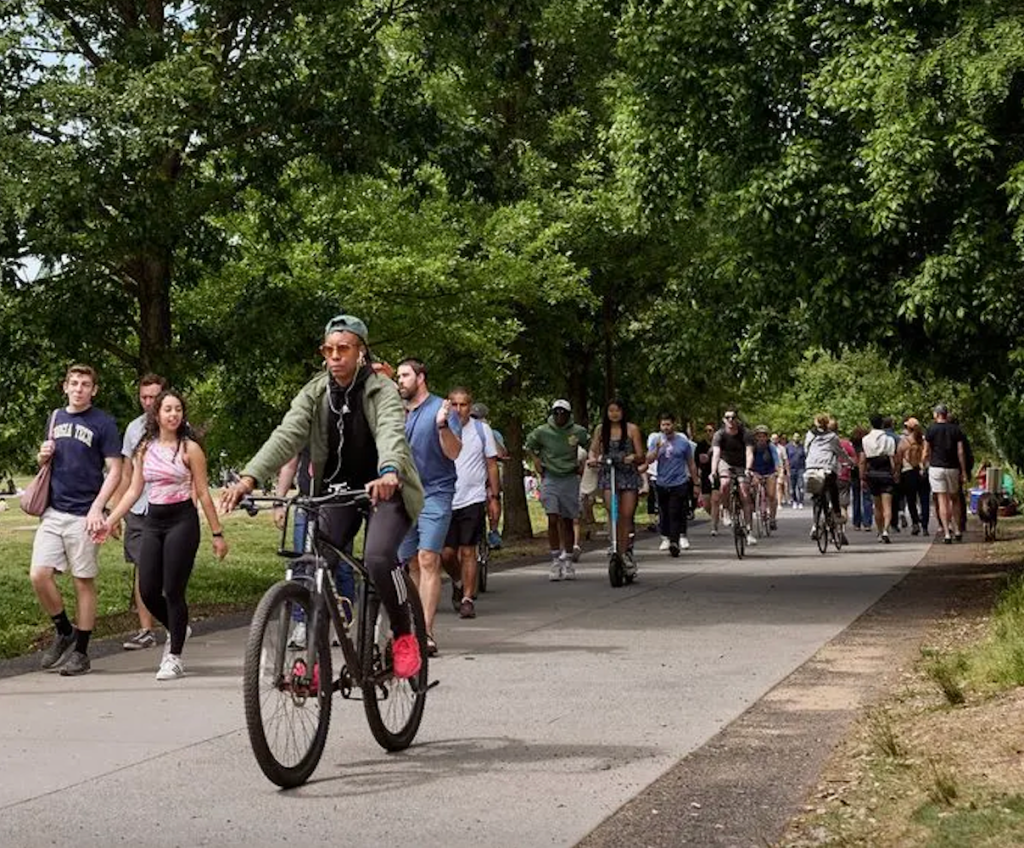
Trails can be wonderful community resources, but they often require tremendous public and private cooperation to authorize, build, and maintain. They’re usually funded through transportation budgets, but the benefits spill far beyond transportation. We keep funding separate programs in efforts to address isolation, inactivity, and struggling small businesses while under-funding something that addresses all three at once: trails.
People in cars often pass establishments without noticing them. People on trails stop at them. And kids can’t develop independence if they can’t bike ahead and take risks, like racing down hills. A trail is far more than simply a recreation amenity. It is the infrastructure that allows a child make a decision without an adult making it first.
I got another nannying job, this time to a four-year-old boy in Atlanta named Matthew. He loved scootering along the BeltLine to go to his favorite splash pad and get an ice cream cone. When the trail diverged, Matthew chose where to go, not looking back at me. For a few moments, the city belonged to him.
Kids need places to take risks without having to worry about being struck by drivers. Let’s build them trails.

On November 12, SBC launched our 2026 fund drive to raise $50K through ad sales and donations. That will complete this year’s budget, at a time when it’s tough to find grant money. Big thanks to all the readers who have chipped in so far to help keep this site rolling to the end of 2026! Currently, we’re at $34,046 with $15,954 to go, ideally by the end of June.
If you value our livable streets reporting and advocacy, please consider making a tax-deductible gift here. If you can afford a contribution of $100 or more, think of that as a subscription. That will help keep the site paywall-free.
Streetsblog has migrated to a new comment system. New commenters can register directly in the comments section of any article. Returning commenters: your previous comments and display name have been preserved, but you'll need to reclaim your account by clicking "Forgot your password?" on the sign-in form, entering your email, and following the verification link to set a new password — this is required because passwords could not be carried over during the migration. For questions, contact tips@streetsblog.org.