Instead of discussing what Chicago can do to protect vulnerable road users like Violet Harris from reckless drivers, the Tribune lays blame on e-scooters

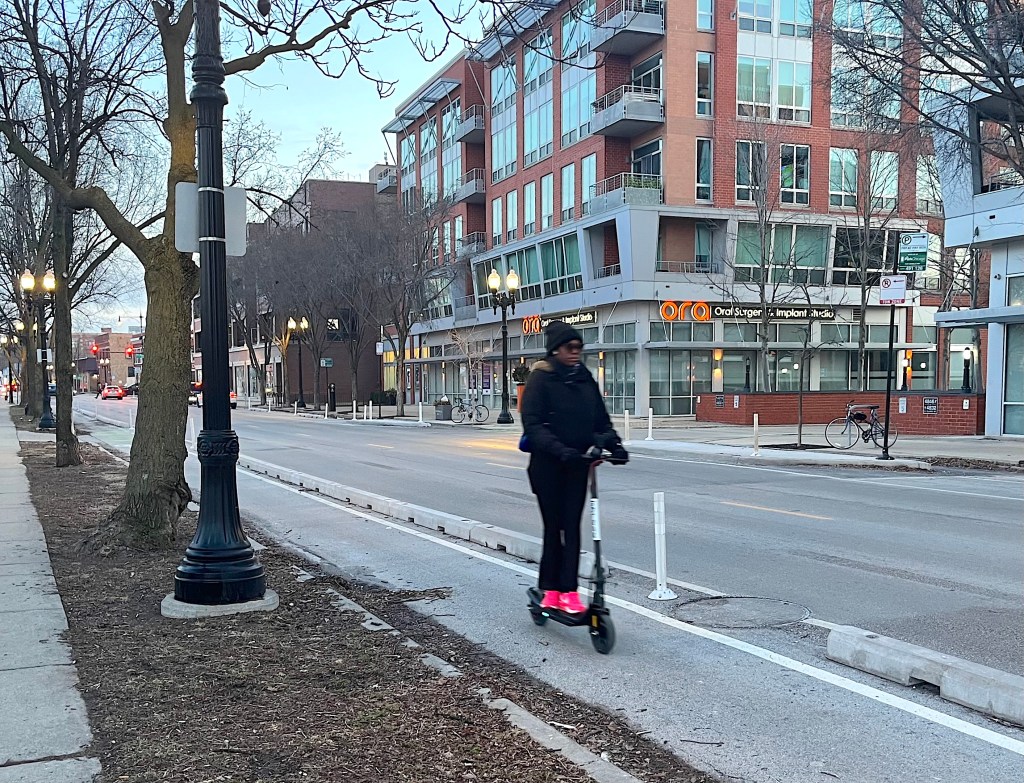
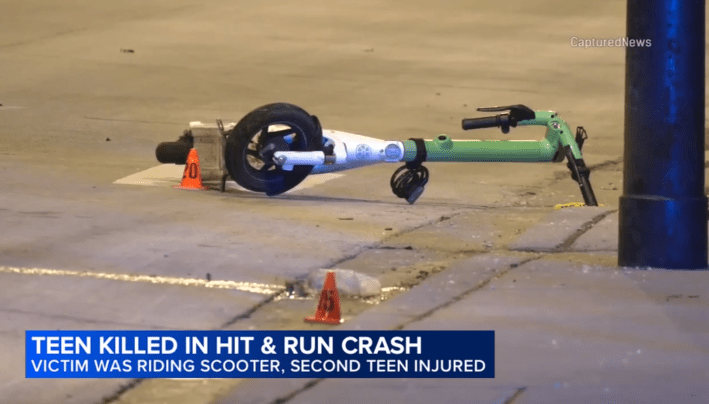
The death of Violet Harris, 15, is the story of a hit-and-run, probably wrong-way, driver fatally striking a vulnerable road user on an e-scooter, and failing to render aid.
But somehow, the often car-centric Chicago Tribune turned this tragedy into an article about “growing concerns about the risks of riding small, low-speed electric vehicles.” That’s in contrast to the actual risks posed by reckless and callous people driving multi-ton vehicles. And the newspaper says little about the time-tested policy and infrastructure changes that could help prevent this kind of heartbreak.
As Streetsblog previously reported, the Illinois Traffic Crash Report for the Harris case states that last Saturday, March 21, around 8:30 PM, she was a passenger on a rental scooter operated by another girl, 13. The rendering of the collision on the report indicates that they were riding west on the north sidewalk of 77th Street in South Shore. When they reached diagonal Exchange Avenue, an intersection where east-west traffic does not have signs to obey, but northwest-southeast traffic has yield signs, they began crossing the street in a marked crosswalk. Exchange has Metra Electric tracks in its median.
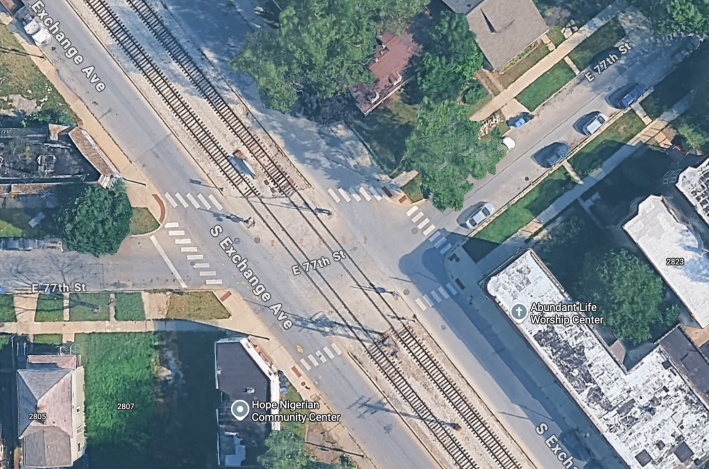
That was when, according to the sketch on the crash report, a southeast-bound motorist was driving against traffic in the northwest-bound lane. If that sounds like an unlikely situation, the report states that the crash was recorded by a Police Observation Device camera, and other information revealed by the cam is stated in the report’s narrative. In other words, it’s likely the driver was doing this incredibly dangerous wrong-way move (SBC is trying to obtain the POD footage to confirm this), and obviously they didn’t yield to the kids on the scooter.
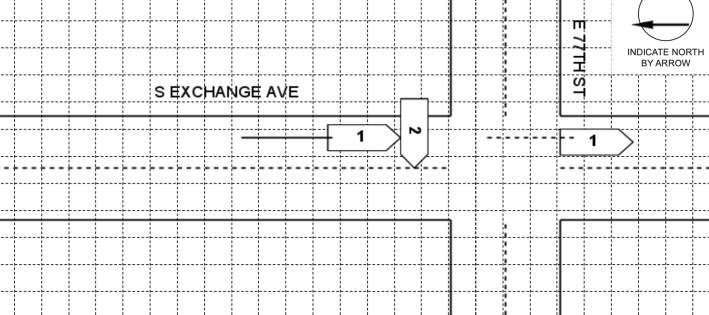
After striking the girls, inflicting “severe head/chest trauma” on Harris and injuring the other girl, the motorist didn’t stop to help the victims, but fled southeast, the report states. The 15-year-old was pronounced dead at a hospital less than an hour later, and the 13-year-old was hospitalized in fair condition.
Harris’ mother Rachel Sturgis posted a GoFundMe page to help pay funeral costs. “My daughter Violet Harris was killed in a hit-and-run on 77th and Exchange while riding her scooter,” Sturgis wrote. “She was ONLY 15 years old.”
This afternoon, CPD News Affair said no one was in custody.

To get this out of the way, no, technically Harris, an honors student at Hyde Park High, and her companion, weren’t following all the laws and rules governing e-scooter rentals in Chicago. You have to be at least 18 to check one out, or 16 with a parent or guardian. Only one person can ride a scooter at a time. And you can’t operate them on sidewalks.
Such mistakes are to be expected from young teens. But even if the scooter user in this case had been an adult riding solo in the street, following the letter of the law, the consequences of a likely wrong-way driver failing to yield would have been similar.
Yet the way the Tribune article is written implies that unsafe scooters, rather than an unsafe motorist, were to blame for the fatality. The piece, written by Hope Moses, is titled “Safety of e-scooters [emphasis added] questioned as family grieves teen killed in hit-and-run.” It’s not clear exactly who, other than the author and the paper’s often driving-obsessed management, is wondering whether micro-mobility devices, rather than driver behavior, enforcement policy, and street design, are to blame in such cases.
Moses presents a long list of grievances against e-scooters, some of which don’t pertain to the Harris case at all. For example, the reporter writes, “High-speed e-scooters, which can travel up to 50 mph, and are available for purchase at retailers, have no state regulations, including an age limit.” ABC Chicago footage shows that the girls were on a Lime rental scooter, which, like all of Chicago’s scooter-share vehicles, are capped at 15 mph, so that statement is completely irrelevant to this tragedy.
The Tribune article was widely blasted on social media as victim-blaming. “Is the issue the scooter or the maniacs that recklessly drive 5000 pound trucks with little to no enforcement?” posted one person. “Is it the scooter or the terrible infrastructure?”
“I’m going to go out on a limb and suggest that maybe a hit and run has more to do with the driver in the car than the kid on a scooter,” commented another. “There doesn’t seem to be any information on the car or driver at all.” In the ABC report, one person describes the vehicle as “a speeding black sedan.”
“It’s amazing the mental gymnastics it requires to continue ignore the threat and role cars/drivers play,” said a third. “It’s cars that are killing people in the tens of thousands, not scooters. It’s the car/driver who killed this teen and injured the other teen. Why is this so hard to just admit, cars are a danger?”
Sustainable transportation advocate Soren Spicknall did a good job of identifying the alpha-omega of what was wrong with the Trib piece in a short Bluesky thread.
Indeed, at end of the piece, there are quotes from Harris’ aunt Terri Dean expressing outrage at the driver. “If I hit a cat, I pull over to the side of the road and call 311,” she told Moses. “For them to hit two babies and to keep going like they were trash in the road — I have no sympathy.” But the inclusion of these statements seems like an afterthought by the Tribune. This message doesn’t make up the meat of article’s main narrative: “Scooters need more regulation.”
There are hints in the Trib piece about what should be done to prevent the killing of vulnerable road users like Harris. “My niece lost her life in a hit-and-run,” Dean told Moses. “Any new laws should prioritize protecting people on our streets… so tragedies like this don’t keep happening.”
“As [shared scooters and bicycles] become more widely used, [the Chicago Department of Transportation] is continuing to invest in safer infrastructure and street designs that better support all users,” a CDOT spokesperson told the Tribune.
But the paper chose to focus on scooters rather than solutions. So, in short, here are some practical infrastructure and policy actions that Chicago can take to stop drivers from fatally striking people on foot, bikes, e-scooters, and buses, as well as other motorists.
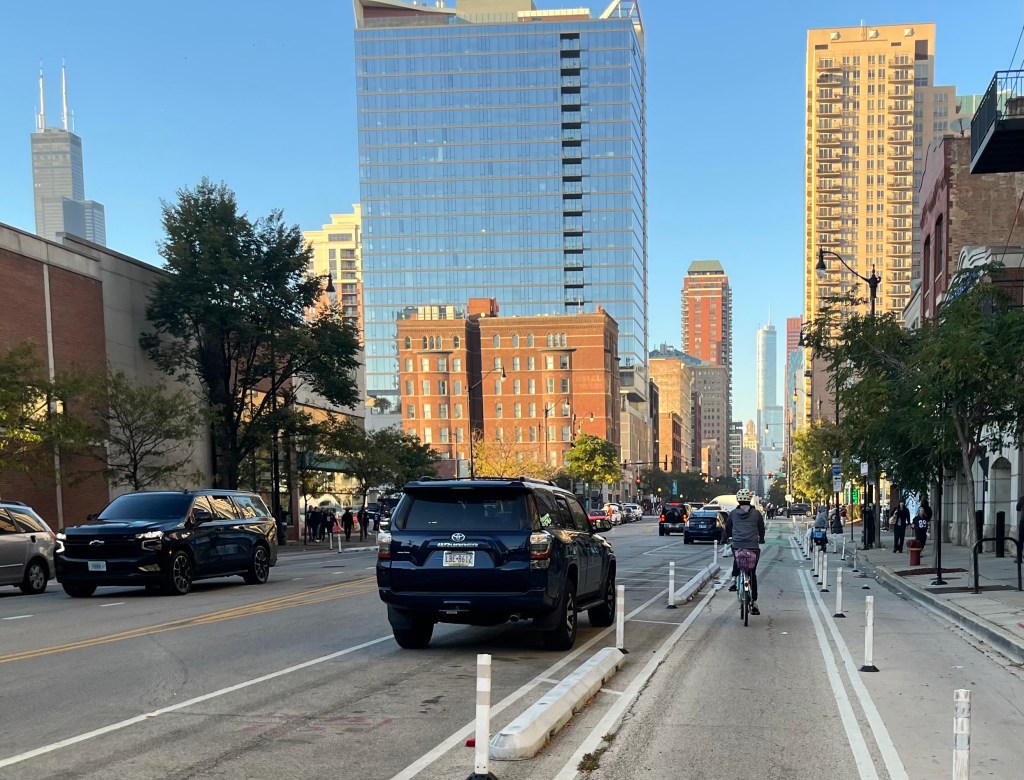
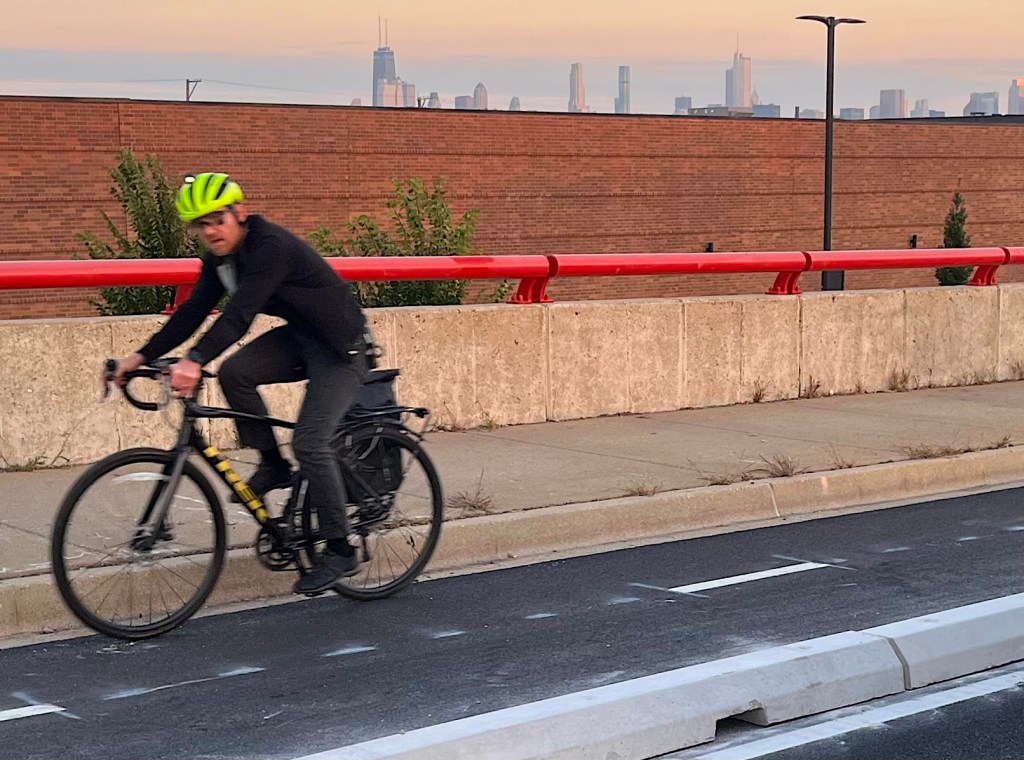
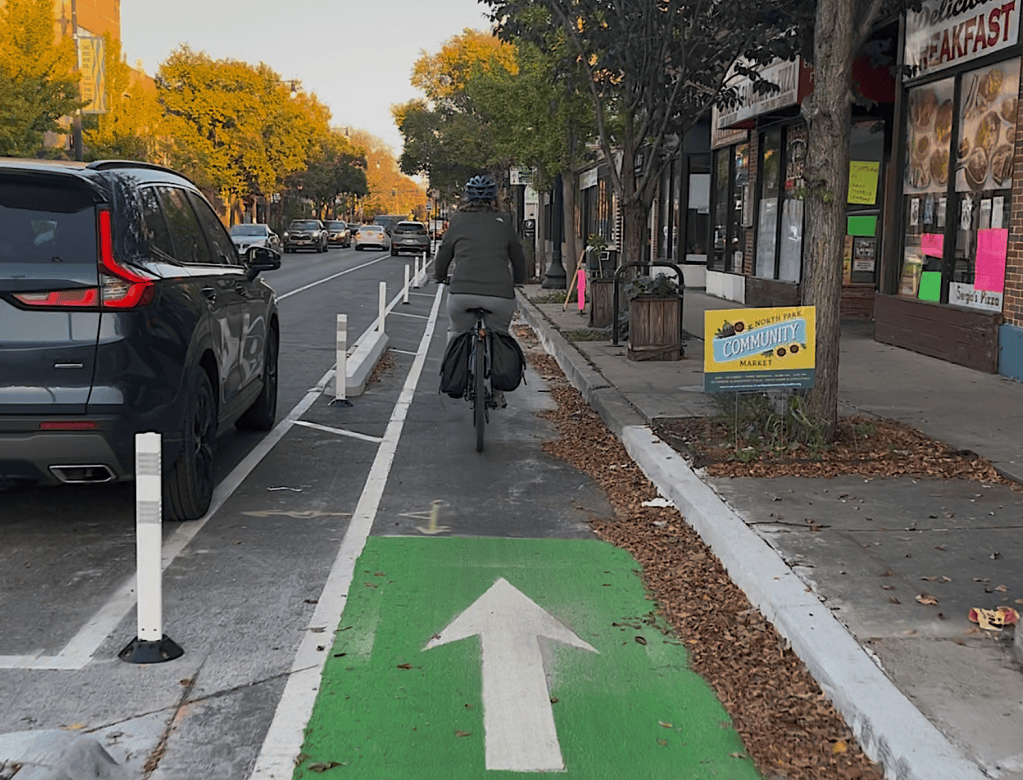
• More infrastructure to calm traffic and shield vulnerable road users, such as protected bike/e-scooter lanes; curb bump-out and pedestrian islands, plus additional marked crosswalks and walk signals; and “road diets.” Sadly, in neighborhoods like Brighton Park and West Town, CDOT “Complete Streets” projects are getting fierce, organized opposition, sometimes due to ulterior political motives.
• More of the unpopular, but effective speed and red light cameras. Preferably this would include the reinstatement of Chicago’s sunsetted Clear Path income-based fines pilot, and the revenue would be earmarked for street redesigns that encourage safe driving and reduce the need for ticketing.

• Lower Chicago’s default speed limit from 30 to 25 mph, a strategy that has saved lives in peer cities like New York. In February 2025, our City Council, including South Shore’s Ald. Gregory Mitchell (7th), voted down an ordinance to do that.
• Pass legislation to allow civilians to report commercial vehicles parked or standing in bus lanes, bus stops, and bike lanes for potential ticketing. The Council also rejected such an ordinance in February 2026.
But rather than look in detail at proven approaches that might make driving slightly less convenient, the Tribune opted to focus on an easy target: e-scooters. Soren Spicknall summed it up nicely. “It’s not like they directly say ‘This kid was likely riding unsafely, which likely contributed to what happened,” he posted. “I’d guess the author sees their presentation as straight news. There’s valid talk out there about scooter safety norms. But the article is infected with windshield view, narrow in frame.”
Read Streetsblog’s previous coverage of the Violet Harris case here.
Read the Tribune article “Safety of e-scooters questioned…” here.
Update 3/27/26, 10:30 AM: Here’s another potential step in the right direction for preventing motorists from killing vulnerable road users in Chicago. My Stateline reports, “New Illinois bill would require [reckless] drivers to install speed-limiting devices.”

If you value Streetsblog Chicago’s livable streets reporting and advocacy, please consider making a tax-deductible donation here to help us continue publishing through 2026. Thank you for your support.

Read More:
Streetsblog has migrated to a new comment system. New commenters can register directly in the comments section of any article. Returning commenters: your previous comments and display name have been preserved, but you'll need to reclaim your account by clicking "Forgot your password?" on the sign-in form, entering your email, and following the verification link to set a new password — this is required because passwords could not be carried over during the migration. For questions, contact tips@streetsblog.org.